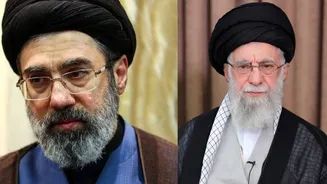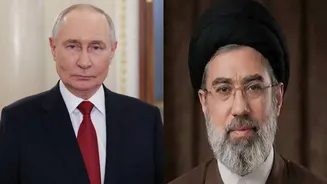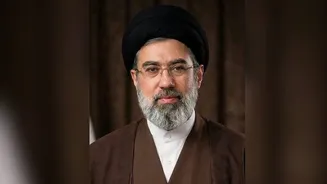






Iran has reportedly put off announcing a successor to the slain supreme leader Ayatollah Ali Khamenei amidst fears that Israel might strike him next. As
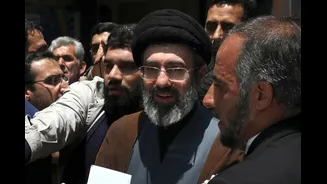
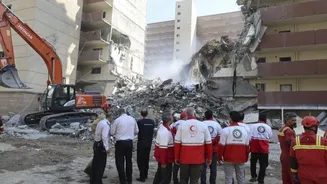
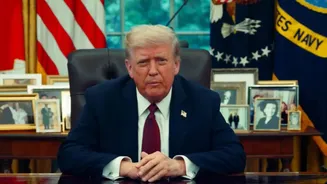
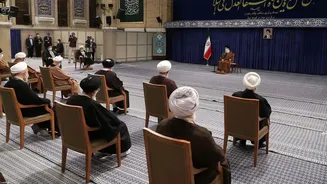
per reports, Khamenei's son Mojtaba was being considered for the post. However, there is much concern over the 56-year-old's safety, especially after Israel's Defence Minister Israel Katz made it clear in a social media post that any newly-appointed leader would be seen as "an unequivocal target for elimination". This was followed by US President Donald Trump's denunciation of Mojtaba on Thursday. Calling him "unacceptable" and a "lightweight", President Trump told Axios, "They are wasting their time. Khamenei's son is a lightweight. I have to be involved in the appointment, like with Delcy (Rodriguez) in Venezuela." Trump added, "Khamenei's son is unacceptable to me. We want someone that will bring harmony and peace to Iran." Iran's leadership selection system is being tested since Khamenei's death. The task of selecting a new Supreme Leader is assigned to the Assembly of Experts. But the process now unfolds under ongoing US-Israeli military pressure and uncertainty about how to keep the successor safe from strikes. Analysts say officials are deliberately delaying the decision to "avoid a pre-emptive strike on him." On Tuesday, Israel bombed the Iranian building in Qom that houses the Assembly of Experts, seeking to disrupt the vote counting. If appointed, Mojtaba Khamenei's rule would signal continuity of the hardline rule and reinforce ties with powerful state institutions, including the Islamic Revolutionary Guard Corps (IRGC), which have shaped Iran's strategic direction for decades. The 56-year-old, however, has never held public office. Trump has compared the Iran succession situation to Venezuela, where he backed vice president Delcy Rodriguez for the post of President, after Nicolas Maduro was captured in January this year by US forces. However, the succession system is quite different in Iran than in Venezuela. Iran's Islamic Republic system is designed to survive against all odds. Its authority does not solely rest on one individual but on a network of clerical and military institutions. Even if Khamenei's death is confirmed, the regime's spine - the IRGC, the Supreme National Security Council, and the Assembly of Experts - remains intact. The Assembly of Experts - a conservative clerical body - is tasked with appointing the new Supreme Leader.