



What is the story about?
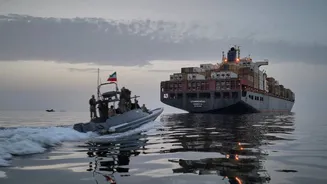
The Trump administration indicated on Tuesday that it is unlikely to accept Iran's proposal to end the ongoing war and reopen the Strait of Hormuz contingent
upon the U.S. lifting its blockade on Iran. The proposal, which would defer discussions on Iran's nuclear program, was met with skepticism by U.S. Secretary of State Marco Rubio, who emphasized the need for a deal that prevents Iran from developing nuclear weapons during a Fox News interview.
White House Response
The White House confirmed that President Donald Trump's national security team has discussed Iran's offer, with Trump expected to address the matter in the near future. The proposal was presented to the U.S. by Pakistan during Iranian Foreign Minister Abbas Araghchi's visit to Russia, a key ally of Tehran.Casualties from Ongoing Conflict
Since the conflict began, reports indicate that over 3,375 individuals have died in Iran, while Lebanon has seen at least 2,521 fatalities amid the fighting involving Israel and the Iran-backed Hezbollah militant group. Additionally, 23 people have been killed in Israel, with the Lebanese toll including 16 Israeli soldiers and six U.N. peacekeepers. The regional death toll also includes 13 U.S. service members and over a dozen individuals in Gulf Arab states.UAE's Withdrawal from OPEC
On Tuesday, the United Arab Emirates announced its decision to leave OPEC and the broader OPEC+ group, effective May 1. This move has been anticipated as the UAE has faced increasing tensions with Saudi Arabia over production limits.The UAE has been a member of OPEC since its establishment in 1971, but its foreign policy has diverged from Riyadh's as Saudi Arabia has sought to attract foreign investments under Crown Prince Mohammed bin Salman.
According to the UAE, this decision aligns with its long-term strategic vision and commitment to enhancing domestic energy production while playing a responsible role in global energy markets.
Economic Impact on Iran
The ongoing airstrikes by U.S. and Israeli forces have severely damaged thousands of factories in Iran, threatening millions of jobs. Key sectors, including steel and petrochemicals, have been hit hard, causing price surges for essential materials.As the U.S. continues its blockade on Iranian ports, economic challenges are likely to intensify, potentially leading to renewed protests similar to those seen before the war. Iranian leaders, however, are banking on a self-reliant economy built under years of sanctions to withstand the current hardships.
Calls for Ceasefire
During a visit to New Delhi, United Nations General Assembly President Annalena Baerbock emphasized the urgent need for a ceasefire in the ongoing conflict, highlighting its disruptive effects on global supplies and the humanitarian crises in the region.Baerbock stated, “Every effort to come to a ceasefire is highly needed,” noting that the conflict is overshadowing the humanitarian situation in Gaza.
Humanitarian Concerns in Gaza
Doctors Without Borders accused Israel of systematically depriving Gaza residents of water as part of a campaign of collective punishment. The organization reported that approximately 90% of Gaza’s water and sanitation infrastructure has been damaged or destroyed.Claire San Filippo, an emergency manager for MSF, stated, “Israeli authorities know that without water life ends, yet they have deliberately and systematically obliterated water infrastructure in Gaza.”
In response, COGAT, Israel’s military body responsible for coordinating aid to Gaza, rejected these accusations, asserting that the water supply in the region consistently exceeds humanitarian thresholds.
Israeli Airstrikes in Southern Lebanon
Israeli airstrikes targeted the villages of Chakra, Tebnine, and Kafra in southern Lebanon, according to Lebanon's state-run National News Agency. The strikes included a drone attack on a motorcycle in the village of Mansouri.Casualty reports remain unclear, but the strikes occurred as Israel's military advised residents of 16 southern villages to evacuate, citing Hezbollah's use of these communities for launching attacks.
Bahrain's Sentencing of Spies
Bahrain has sentenced 30 individuals to life imprisonment and 10-year terms for allegedly spying for Iran and supporting attacks on the kingdom. Five individuals received life sentences for spying for Iran’s Revolutionary Guard, while 25 others were sentenced for supporting Iranian terrorist acts.Human rights activists have criticized Bahrain's judicial practices, particularly regarding closed-door trials that limit defendants' rights to a fair defense.
Tragic Incident in Gaza
A 9-year-old boy was killed by Israeli gunfire in southern Gaza while collecting firewood, according to Nasser Hospital. The incident occurred in Khan Younis, approximately 400 meters from the Israeli-controlled border.Hospital staff reported that the boy’s death marked a continuation of violence in the region, with at least 818 Palestinians, including 226 children, having been killed since the ceasefire agreement in October.
Diplomatic Outreach by Pakistan
Pakistan Prime Minister Shehbaz Sharif spoke with New Zealand Prime Minister Christopher Luxon regarding Pakistan's diplomatic efforts to promote peace and de-escalation in the region. Luxon expressed appreciation for these initiatives.Sharif reaffirmed Pakistan's commitment to dialogue and regional stability, as the two leaders discussed the importance of ongoing diplomatic engagement.
Damage to Gaza's Agriculture
A recent study by Mercy Corps revealed that 96% of Gaza's agricultural land is either damaged or inaccessible due to the ongoing conflict. The study highlighted the significant degradation of water systems and farmland.Mercy Corps warned that the destruction of agricultural infrastructure is closely linked to a growing food crisis in the region, and recovery efforts could be severely hindered if restrictions on goods delivery continue.
U.S. Official's Remarks on Iran
A senior U.S. State Department official stated that Iran's actions in the Strait of Hormuz should serve as a wake-up call for global energy security. Under Secretary of State for Political Affairs Allison Hooker emphasized the need to diversify energy supplies to mitigate future risks.Hooker remarked, “We all need to do more,” stressing the importance of securing supply chains and reducing reliance on unstable regions.
Rubio's Stance on Nuclear Threat
Secretary of State Marco Rubio reiterated the U.S. position regarding Iran's nuclear ambitions, stating that any agreement must prevent Iran from pursuing nuclear weapons. He expressed skepticism about Iran's intentions in negotiations, suggesting they are skilled negotiators seeking to gain time.Rubio emphasized, “We can’t let them get away with it,” highlighting the need for a robust approach to any potential deal.