




The latest escalation in the Iran war has effectively turned one of the world’s most critical trade arteries into a militarised checkpoint. Audio released
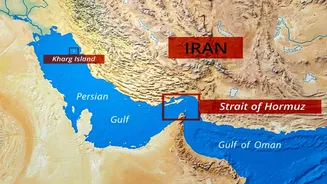
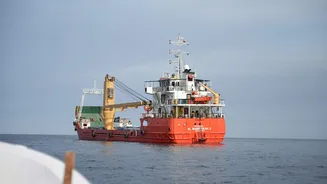
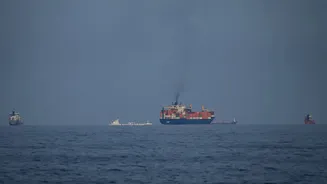
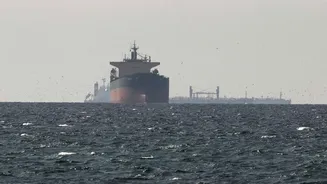
by United States Central Command (CENTCOM) captures US naval forces warning: “Do not attempt to breach the blockade… Vessels will be boarded… If you do not comply… we will use force.” The message goes further, stating that the “whole of the United States Navy” is prepared to enforce compliance—signalling a shift from deterrence to active coercion. This is not targeted messaging—it is a blanket warning to vessels operating in and around the Strait of Hormuz, a route through which nearly 20% of global oil flows in normal conditions.
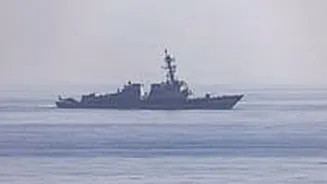
U.S. naval vessels are on patrol in the Gulf of Oman as CENTCOM continues to execute a U.S. blockade on ships entering and departing Iranian ports. U.S. forces are present, vigilant, and ready to ensure compliance. pic.twitter.com/dnHR2oz0ZN
— U.S. Central Command (@CENTCOM) April 15, 2026
This comes as Washington formalises its blockade of Iranian ports and coastal infrastructure, marking one of the most aggressive naval postures in the region in recent years. What emerges is a clear shift: the US is no longer just confronting Iran—it is actively regulating who can trade, where, and under what conditions.
Carrier Strike Group Deployed To Enforce Blockade
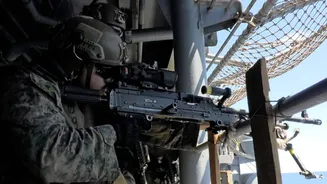
At the centre of this operation is the USS Abraham Lincoln (CVN-72) Carrier Strike Group, with approximately 5,000 sailors and Marines deployed to execute blockade enforcement. CENTCOM confirmed that these forces are actively engaged in operations to stop, board, and potentially seize vessels linked to Iranian ports.
The deployment underscores the scale of the operation—not merely symbolic, but operationally active across the Arabian Sea and Gulf approaches. The presence of a full carrier strike group provides air cover, surveillance capability, and rapid strike options—giving the United States a dominant maritime posture in the region.
Iran Calls It ‘Illegal’, Warns Of Retaliation
Tehran has responded by rejecting the blockade outright, calling it unlawful and warning of proportional retaliation. Iran’s position is simple: no external power has the authority to dictate access to its ports or regulate regional shipping. The blockade, from Tehran’s perspective, is not enforcement—it is coercion. The situation now risks escalation beyond a bilateral confrontation. Any retaliatory move by Iran—whether targeting shipping or military assets—could rapidly widen the conflict envelope.
Thousands of U.S. service members, including 5,000 Sailors and Marines from the Abraham Lincoln Carrier Strike Group, are executing the mission to blockade ships entering and departing Iranian ports. 📽 of USS Abraham Lincoln (CVN 72) conducting flight operations in the Arabian… pic.twitter.com/Q07nAosJyq
— U.S. Central Command (@CENTCOM) April 15, 2026
Beneath the military posturing lies a deeply contested legal question. The Strait of Hormuz is recognised under international law as an international strait, where all states enjoy the right of transit passage. This right is not easily suspended, even during periods of conflict, and is designed precisely to prevent chokepoints from becoming instruments of unilateral control.
While naval blockades are permitted under certain wartime conditions, they are bound by strict legal criteria. They must be formally declared, applied without discrimination, and must not unduly restrict neutral shipping.
The current US approach sits in a legally ambiguous space. There is no clear multilateral mandate, and the extension of enforcement measures to vessels beyond Iranian trade raises questions about proportionality and jurisdiction. In effect, the situation is not just a military escalation—it is a stress test of international maritime law.