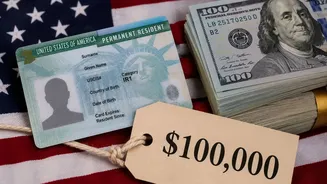









The Trump administration is considering requiring some people applying for US green cards at American consulates overseas to post bonds of up to $100,000,
according to people familiar with the discussions quoted by The Wall Street Journal. The proposal, which is being developed by the US State Department, forms part of the administration's broader efforts to tighten immigration rules and ensure that immigrants can financially support themselves after arriving in the United States. How the Proposal Would Work According to the WSJ report, officials are considering applying the bond requirement to certain applicants seeking immigrant visas, which allow people to permanently settle in the United States and receive a green card upon arrival. Some State Department officials have discussed a bond of $100,000, although the amount could vary depending on the individual case and could be higher or lower, the sources said. Officials are also considering introducing the policy first in a small number of countries as a pilot programme. Several people familiar with the discussions said applicants would likely receive the money back only after becoming US citizens, a process that typically takes at least five years. Under the proposal, the bond would act as collateral if a green card holder later proved unable to support themselves financially. Family members could also post the bond on behalf of applicants, according to the sources. State Department spokesperson Tommy Pigott said the administration was examining its existing legal authority to introduce such a requirement. "President Trump has made clear that those who wish to immigrate to the United States must be financially self-sufficient," Pigott said. He added that the department was exploring provisions under the Immigration and Nationality Act requiring certain visa applicants to post a bond "as a way to demonstrate they have access to the funds needed to support themselves." Who Could be Affected? Immigrant visas are most commonly issued to relatives of US citizens, including spouses, parents and siblings. The State Department typically issues around half a million immigrant visas each year, although that figure is expected to decline this year. The proposal follows a broader immigration crackdown by the Trump administration. Earlier this year, the administration paused immigrant visa processing for applicants from 75 countries, including Pakistan, Nigeria and Brazil. Although temporary visas for tourists and students continue to be processed, immigrant visa decisions for affected applicants have been delayed since January. According to people familiar with the matter, officials do not expect that pause to be lifted even if the bond programme is introduced. Immigration lawyers have criticised the proposal, arguing that it could make permanent immigration unaffordable for many families. Sharvari Dalal-Dheini, head of government relations at the American Immigration Lawyers Association, said the policy would disproportionately affect lower-income applicants. "The goal of bonds is, it seems, to keep out a certain type of immigrant," she said. "We're making our system pay-to-play: only the wealthy can come visit, or reunite with family, or seek a better life for themselves." The proposal builds on a visa bond pilot programme launched by the State Department in August last year for some tourist visa applicants. Initially introduced for travellers from Malawi and Zambia, the programme required refundable bonds of up to $15,000, which could be forfeited if visa holders overstayed or sought another immigration status after entering the United States. The programme has since expanded to 50 countries, most of them in Africa. The State Department has described the initiative as an early success, saying about 97% of travellers who paid the bond complied with the terms of their visas. According to people familiar with the programme, officials ultimately hope to expand the tourist visa bond requirement to applicants from all non-visa waiver countries.