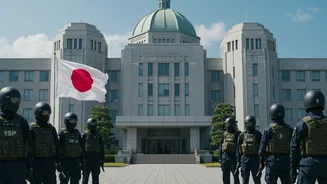







Japan is preparing its most sweeping intelligence overhaul since World War II, moving to build a modern spy agency as it faces growing threats from China,
North Korea and Russia. According to The Washington Post, Tokyo is creating a new national intelligence bureau that will coordinate intelligence gathering across government agencies and report directly to the prime minister. The overhaul comes amid an increasingly volatile security environment in the Indo-Pacific and growing pressure from US President Donald Trump for allies to shoulder more of their own defence responsibilities. For decades, Japan has been viewed as one of the weakest intelligence players among major powers, relying heavily on allies such as the United States for critical intelligence. During that time, Chinese-linked cyberattacks, espionage campaigns and alleged theft of Japanese trade secrets exposed major gaps in the country's security apparatus. Prime Minister Sanae Takaichi has made national security a cornerstone of her agenda. Alongside higher defence spending and relaxed restrictions on lethal arms exports, her government is now pushing to modernise Japan's intelligence capabilities.
What Japan is planning
The first step is the creation of a national intelligence bureau that will act as the country's central coordinating body, streamlining intelligence collection and analysis across agencies while reporting directly to the prime minister.
"The security environment has become the most severe and the most complex since the end of World War II," Keitaro Ohno, head of the ruling party's Intelligence Strategy Headquarters, said, underscoring the urgency behind Tokyo's intelligence revamp. "Our objective is to make Japan a safer country."
But Tokyo's ambitions extend far beyond creating a central intelligence bureau. According to The Washington Post, Japanese officials ultimately want to build an intelligence agency comparable to the CIA—one capable of conducting overseas espionage, recruiting human intelligence sources, intercepting communications and countering foreign spy networks targeting Japan's industries and government institutions. The government is also working on legislation that would make it easier to investigate and prosecute suspected espionage cases.
Members of the US-led Five Eyes intelligence alliance have also seen Japan as a vital security partner in Asia but one that has yet to develop intelligence capabilities matching its geopolitical role.
Even so, former Western intelligence officials believe Japan has the potential to emerge as a major source of intelligence on China and North Korea in the future. As one former senior official told The Post, however, Tokyo is "years away" from reaching that level.