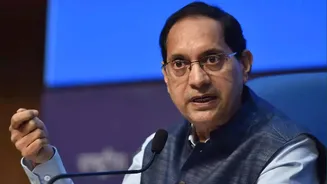









The Securities and Exchange Board of India (SEBI) is working to implement a global supervisory toolkit for artificial intelligence while also moving ahead
with a pilot for tokenised corporate bonds, Chairman Tuhin Kanta Pandey said. He further added that the regulator is stepping up its use and oversight of emerging technologies in the securities market. SEBI is working on implementing the International Organization of Securities Commissions' (IOSCO) supervisory toolkit for AI use in the Indian securities market to strengthen risk management and support an agile AI governance framework, Pandey said at the Global Fintech Fest 2026. The regulator seeks to make its own supervision more technology-driven. SEBI chief has said the objective was not merely to automate supervision but to use data, analytics and AI to identify patterns that may not be visible through traditional methods, making regulation increasingly predictive and capable of identifying emerging risks early. “As market participants use advanced technologies at greater speed and scale, regulators must be able to supervise with comparable sophistication. Technology can be outsourced, accountability cannot," he said. The growing dependence on AI, cloud computing and other external technology providers cannot allow regulated entities to pass on responsibility for compliance or market integrity, he said. “A market intermediary or institution cannot transfer responsibility for compliance, resilience, or market integrity to a technology provider or a vendor,” Pandey added. SEBI chief said oversight cannot stop when a technology provider is onboarded, particularly as AI models, software and architectures can change over time. SEBI chief said the oversight of technology providers should be risk-based and proportionate, rather than bringing every vendor under intermediary-style regulation. Regulatory scrutiny should increase with a provider's proximity to trading, settlement, sensitive data and investor outcomes. When a single technology provider serves several institutions, an entity-level failure can potentially become a market-wide risk, warranting closer regulatory reach. However, this does not necessarily require direct regulation of the provider, Pandey said.