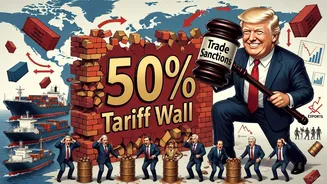

In another twist in the trade war, Mexico has levied a tariff hike of up to 50% on Indian goods which will take effect next year, Reuters reported. This
move comes amid the ongoing tariff tension, with US President Donald Trump leveraging tariffs in the geopolitical sphere. The decision to levy tariff is not just solely confined to India, but includes host of other Asian countries, including China. Mexico has approved a new tariff law that will sharply raise import duties on several countries, including India, China, South Korea, Thailand and Indonesia. The decision goes through despite protests from local business groups and objections from the affected governments. Also Read: Why Indian Rice Exporters Aren’t Worried About Trump’s New Tariff Threat
What the New Tariffs Mean
The bill, already passed by the lower house, introduces higher taxes on imports from countries that do not have a trade agreement with Mexico. According to Reuters, from 2026, certain goods such as cars, auto parts, textiles, clothing, plastics and steel will face tariffs of up to 50%.
Most other imported products will face tariffs capped at 35%.
The Senate approved the measure with 76 votes in favour, 5 against, and 35 abstentions.
A Softer Version of an Earlier Proposal
An earlier draft of this law, which failed to pass, had proposed tariff changes on nearly 1,400 product lines. The new version cuts tariffs on about two-thirds of those items - an attempt to balance political pressure, economic concerns and diplomatic tensions, according to Reuters.
Why This Matters
Analysts told Reuters that the move appears designed to serve two goals:
Show alignment with the US ahead of the upcoming review of the US-Mexico-Canada Agreement (USMCA).
Increase government revenue.
Mexico expects the tariff changes to generate $3.76 billion next year, helping reduce its fiscal deficit.
Supporters argue the tariffs will protect local industries struggling against cheaper Asian imports.
Opposition senator Mario Vázquez (PAN) told Reuters that consumers may end up paying more, but the move could still help vulnerable sectors and save jobs. He said the government must explain how the extra revenue will be used, ideally to strengthen domestic supply chains.
Lawmakers from the ruling Morena party defended the bill more enthusiastically.
Senator Emmanuel Reyes, who leads the Senate Economy Committee, told Reuters the tariffs will make Mexico stronger in global supply chains and help protect employment. He insisted the policy is “not just about raising money” but shaping economic strategy in the national interest.
The Geopolitical Angle
The decision comes as Mexico tries to manage pressure from both the US and China.
Earlier this year, Mexico raised tariffs on a different set of Chinese goods in what analysts saw as an attempt to ease US concerns. Washington has been wary about Chinese imports entering the U.S. market through Mexico.
For now, the tariff hike is expected to test Mexico’s ties with several Asian economies — even as Mexico prioritises maintaining stability with the US at a critical moment in the USMCA’s future.