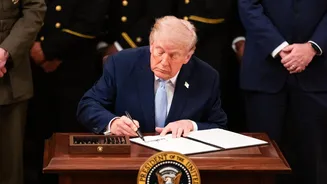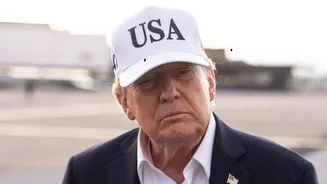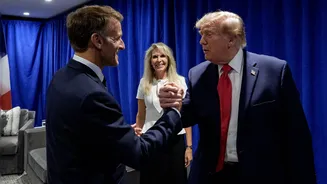




French President Emmanuel Macron on Tuesday said he and US President Donald Trump have agreed to work together to ease tensions in global energy markets,
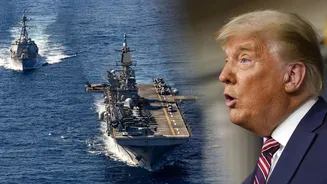
protect critical infrastructure in the Middle East and safeguard freedom of navigation through the Strait of Hormuz. Macron also said the two leaders would push for a moratorium on strikes against energy infrastructure, while calling for serious negotiations on peace between Russia and Ukraine. Speaking to reporters after his meeting with Trump, Macron said the two leaders had held a "very good" and "very constructive" discussion. "We decided to act together to ease tensions in the energy markets, by protecting critical infrastructure in the Middle East and freedom of navigation in the Strait of Hormuz," Macron said. Macron said that he and Trump agreed on the need to help Kyiv strengthen its defences. He said that both leaders would pool their efforts to "secure a moratorium on strikes against energy infrastructure and against Ukrainian civilian infrastructure." The French President said he would bring up the subject when he meets Ukrainian President Volodymyr Zelenskyy later in the day.
The French leader said helping Ukraine's energy system remained a priority as the war continued to affect security across Europe, and he hoped progress could be made during the annual gathering of leaders at the United Nations.
"We had a lengthy discussion on Ukraine and Russia, the need to help our Ukrainian friends more quickly and more strongly in terms of interceptors, because that is the key issue from a defensive point of view," Macron said.
"Civilian populations must be protected, and we must initiate as soon as possible a serious negotiation on the conditions for peace between Russia and Ukraine," Macron said.
The two leaders met in New York as they arrived for the annual high-level gathering at the United Nations General Assembly. The upcoming UNGA session is likely to be consumed with major wars in Iran, Gaza, Ukraine, Sudan, Congo and Myanmar and a persisting question: Can the leaders do anything to end them?
The future of the United Nations will also definitely be on the agenda. At 81, its powers are still the victorious nations from World War II, not the 21st century’s major global players. Behind the scenes, there will be speculation about who will lead the United Nations next. Secretary-General Antonio Guterres’ second five-year term ends Dec. 31 and no clear successor has emerged.