








What is the story about?
CAPE CANAVERAL, Fla. (AP) — NASA has commenced the procurement of landers, rovers, and drones to establish a comprehensive moon base, following the successful
Artemis II lunar flyaround conducted two months ago. The agency disclosed its initial plans for the moon base on Tuesday, announcing substantial contracts worth hundreds of millions of dollars awarded to four American companies.
Contract Awards and Equipment Details
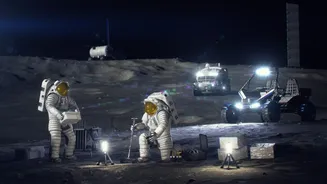
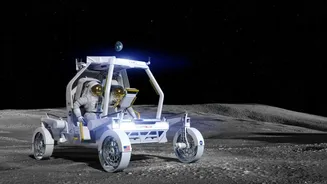
Jeff Bezos' Blue Origin will supply two landers tasked with delivering lunar buggies to a designated area near the moon's south pole. These lunar terrain vehicles will be constructed by Astrolab and Lunar Outpost. Additionally, Firefly Aerospace, which successfully landed on the moon last year, will provide the first drones for lunar operations.Timeline for Lunar Missions
All equipment is expected to arrive before the first Artemis astronauts are scheduled to land on the moon, which is anticipated as early as 2028. The Artemis II mission in April saw four astronauts orbit the moon, marking a deeper space journey than that of the Apollo missions in the late 1960s and early 1970s.Next year’s Artemis III mission aims to have another crew of astronauts practice docking NASA’s Orion capsule in Earth orbit with the lunar landers being developed by Blue Origin and SpaceX, founded by Elon Musk.
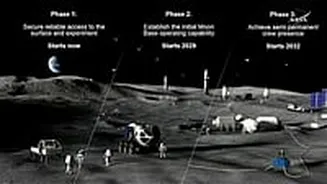
Future Phases of Moon Base Development
NASA is targeting mid-2027 for Artemis III, with a planned landing of two astronauts potentially occurring in 2028. The second phase of the moon base's development, spanning from 2029 into the early 2030s, will focus on establishing permanent infrastructure, including a power grid. The third phase will prepare the base to support astronauts for extended durations in specialized habitats, which is projected to be completed in the 2030s.Statements from NASA Officials
“Then we'll be able to say, 'Hey, we're permanently here and we're not giving it up,'” remarked Carlos Garcia-Galan, NASA's moon base program executive, envisioning a vast lunar base marked by drones positioned at its corners, referred to as MoonFall.Nasa Administrator Jared Isaacman emphasized that these territorial markers would respect the presence of other nations' spacecraft and equipment nearby, fostering an environment of mutual respect.
Isaacman underscored the moon base's objective to stimulate a lunar economy while conducting scientific research and laying the groundwork for future Mars expeditions. “For those waiting patiently, the grand return is close at hand and we will not slow down,” he affirmed. “We are really just getting started.”