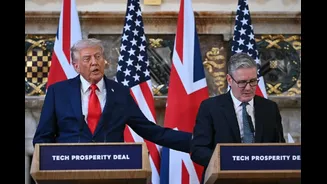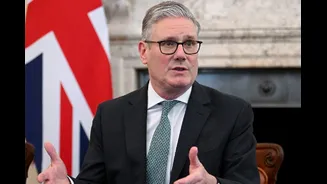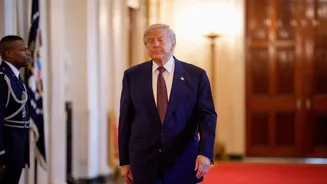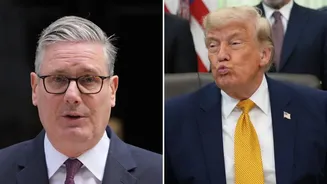




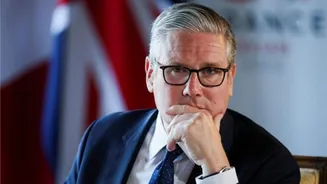


Hours after British Prime Minister Keir Starmer said he would be stepping down, US President Donald Trump on Monday hit out at him, accusing him of not
helping the US during its war against Iran. Speaking about Starmer to reporters in the Oval Office, Trump called him a "lovely man" and "sort of a friend of mine," adding that he wished him well. At the same time, he took aim at British government policies, particularly on energy, immigration and assistance during the Iran war. Trump said he raised concerns directly with Starmer about the country's use of wind power, telling him, "You're really messing up energy. You have windmills all over the place." He has long criticized wind turbines as inefficient and harmful to landscapes. He also pointed to immigration as a weakness of Starmer's leadership, arguing that current policies could have negative consequences for the United Kingdom. "He's got two problems, energy and immigration ... and crime," Trump added.
Reporter: You've been quite critical of Prime Minister Starmer, and he's now resigned. Your thoughts and who would you like to see as the next Prime Minister?
Trump: I wish him well, but he's got two problems energy and immigration and crime pic.twitter.com/VRzkfaozfo— Acyn (@Acyn) June 22, 2026
The President also criticized Starmer over his push-back to assisting the US and Israel in its Iran war efforts. "Starmer wasn't there, and the people of the UK did not like that he wasn't there. Starmer said, 'We will be there as soon as you win.' I said, 'We don't need you when we win.'"
Trump quipped, "This is not Winston Churchill we're dealing with, that I can tell you."
Why Did Keir Starmer Resign?
Starmer's resignation follows months of pressure over immigration, welfare, defense spending and Labour's falling support in traditional working-class areas, where Nigel Farage's Reform UK has sought to cast itself as the voice of voters abandoned by both major parties.
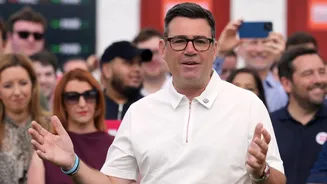
Andy Burnham, the former Greater Manchester mayor who returned to parliament after defeating Reform in the Makerfield by-election, is now the front-runner to replace Starmer. Labour leadership nominations are due to open July 9, with Burnham potentially entering Downing Street within weeks if he avoids a serious challenge.
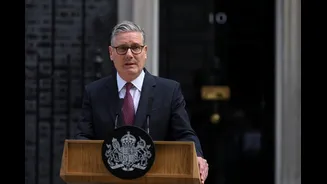
Standing in front of 10 Downing Street on Monday, Starmer said, "the question my party is asking now is whether I am best placed to lead us into the next general election." "I have heard the answer of my parliamentary party to that question and I accept that answer with good grace," he said, "that is why I will resign as leader of the Labour Party."
Since the Brexit referendum — the UK's 2016 vote to leave the European Union — Britain has been led by David Cameron, Theresa May, Boris Johnson, Liz Truss, Rishi Sunak and Starmer, with a seventh prime minister now set to follow.
During his speech on Monday, Starmer listed the Labour Party's achievements in government.
These included an improving economy compared with Europe, rising wages, falls in public hospital waiting lists and tougher policies on asylum seekers and immigration. He also listed greater investment in defense spending — an area he had previously been criticized for by President Trump.