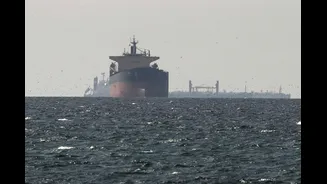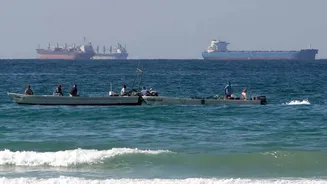







In a major diplomatic win for India, two Indian-flagged liquefied petroleum gas (LPG) carriers sailed through the Strait of Hormuz, amid the escalating
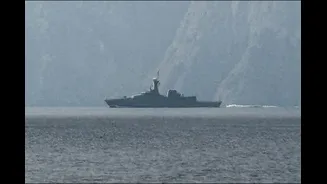
conflict in West Asia. The passage of these two ships comes after a series of conversations between the Indian and the Iranian leaderships over the last few days. The Strait of Hormuz is a strategic narrow sea lane between the Persian Gulf and the Gulf of Oman and around 20–25% of the world’s crude oil supply passes through it. On Friday, Iran allowed two Indian-flagged LPG carriers to pass through the Strait of Hormuz, reported Reuters, citing sources. The names of the ships are Shivalik and Nanda Devi. "This seems to be a humanitarian gesture, after the Indian Prime Minister's telephone call with Dr. Pezeshkian," Foad Izadi, Associate Professor, Faculty of World Studies, University of Tehran, told Times Now. Iran War Live Updates - Check Here The development came hours after Iran’s Ambassador to India Mohammad Fathali called New Delhi a great friend and signalled that soon Indian vessels could get safe passage through the strait. “As I said in my speech, we have a good relation with the government of India, and our officials talked yesterday with the Indian government and its officials. I think we should pray to Allah to remove all the obstacles in different fields. As for your question, we will try our best to remove the problems. I think you can expect good news in the near future," said Fathali when asked if Iran would allow Indian-flagged vessels to pass through the Strait of Hormuz.
India's High-Level Diplomatic Outreach to Tehran
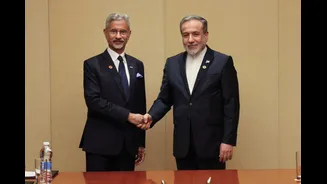
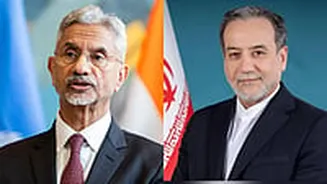
New Delhi has maintained high-level diplomatic outreach with the leadership in Tehran. External Affairs Minister S Jaishankar and his Iranian counterpart Seyed Abbas Araghchi have held four phone calls since the beginning of the war.
Jaishankar and Araghchi had spoken on February 28, soon after the US and Israel launched the attack on Iran that killed Ayatollah Ali Khamenei. They also spoke on March 5 and March 10. The latest call was held on Thursday night.
Prime Minister Modi on Thursday night spoke to Iranian President Masoud Pezeshkian over the phone and discussed the "serious situation" in West Asia.
28 Indian Vessels Were Stranded in Strait of Hormuz
Hundreds of ships had been stranded in the narrow sea lane between Iran and Oman since the beginning of the war. A total of 24 Indian-flagged vessels with 677 Indian seafarers are currently located to the west of the Strait of Hormuz, while four vessels with 101 Indian seafarers are stationed to the east of the strategic waterway, according to the Shipping Ministry.
Earlier on Friday, one of the 28 Indian-flagged vessels stranded in the Strait of Hormuz had sailed away safely, according to Rajesh Kumar Sinha, Special Secretary in the Ministry of Shipping. The Indian-flagged oil tanker, Jag Prakash, which is carrying gasoline from Oman to Africa, has set sail from east of the Strait of Hormuz, Sinha said at a media briefing.
Iran Chokes Strait of Hormuz Amid War With US, Israel
While US President Donald Trump told reporters on Wednesday that “we're not finished yet”, Iran continued to remain defiant and used the choking of the strategic Strait of Hormuz as leverage against the US-Israel combine. The Strait of Hormuz is a strategic narrow sea lane between the Persian Gulf and the Gulf of Oman.
The West Asia conflict began after the US and Israel launched a major military attack on Iran on February 28, killing 86-year-old Supreme Leader Ayatollah Ali Khamenei. Iran, in retaliation, attacked several Gulf nations hosting American military bases, impacting global aviation operations, oil prices and triggering a looming energy crisis and choking the Strait of Hormuz.