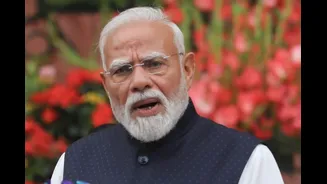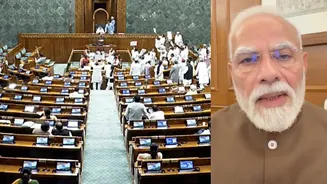




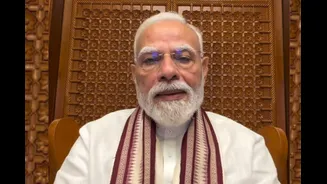
Prime Minister Narendra Modi, dropped a new Instagram video hours after the Parliament cleared the anti-paper leak bill on Thursday and warned "paper leak gangs"
and "mafia" saying that they won’t be spared. He added that the government was taking steps one after the other to reform the examination system. The Prime Minister's remarks have come after the Public Examination (Prevention of Unfair Means) Amendment Bill, 2026, was cleared in the Rajya Sabha with a voice vote amid a walkout by several Opposition parties of the INDIA bloc. The Lok Sabha had passed the Bill on Wednesday. The amended bill includes stricter punishments like longer jail term, increased fine, trial in fast-track courts, with the government expressing its commitment to go the extra mile to safeguard the interests of students.
PM Modi's Instagram Outreach To Students
The Prime Minister, who has been reaching out to the younger generation via social media platforms amid the row over the NEET-UG paper leak and the Cockroach Janta Party (CJP) protest that forced the government to sack Union Education Minister Dharmendra Pradhan, said that for the last few decades, every state and central government has been facing the problem of paper leaks due to which the future of our children is being jeopardized.
However, he informed that they are taking steps to reform the examination system, be it by creating a task force, setting up a fast-track mechanism, or taking into account the suggestions of the states.
"Friends, we are taking steps one after the other to reform the examination system. Whether it’s about creating a task force, setting up a fast-track mechanism, and taking into account the suggestions of the states. Because for the last few decades, every state and the central government have been facing the problem of paper leaks. The future of our children is being jeopardized because of this. Keeping all these factors in mind, it has become necessary to improve the education system across all states and at the Centre," PM Modi said.
Paper Leak Gangs, Mafia Won't be Spared, Says PM Modi
Mentioning that greater use of technology has become essential, the Prime Minister in his Instagram video added, "At the same time, the paper mafia, paper leak gangs, and those who play with the future of the country's children will not be spared. Therefore, strict laws are also necessary."
"We introduced the Bill in Parliament. As I had promised, both Houses of Parliament discussed it in detail over the past two days. Today, both Houses have passed this Bill with stringent provisions. Now, an important step has been taken towards reforming the examination system. The work will continue. We will not allow such situations to persist. With this resolve, let us all come together to fulfill the dream of a developed India," PM Modi concluded.
What's In Amended Anti-Paper Leak Bill
According to the amended Bill, individuals involved in paper leaks or unfair means in exams will get jail terms for a minimum of 5 years and a maximum of 10 years, and a fine of up to Rs 50 lakh.
For organised crimes, the Bill proposes a minimum sentence of seven years and a fine of not less than Rs 10 crore.
The Bill does not cover the NTA alone; it also covers other examinations, including those conducted by the UPSC, SSC and banks, the government said.
The amendment bill seeks to empower all state governments and Union Territory administrations to designate any court of session to be a special fast-track court to try offences under the proposed law.
It also provides that proceedings in such courts are continued on a day-to-day basis and the trial is completed within three months from the date of filing of the charge sheet.
The Bill also empowers the central government to constitute a special task force to investigate offences.
The 2024 law was brought in when the government faced raging paper leak controversies. Before this legislation, there was no specific substantive law to deal with unfair means adopted or offences committed by various entities involved in the conduct of public examinations by the central government and its agencies.
With inputs from PTI