







What is the story about?
The six-month-old US war against Iran has cost at least $38 billion, with expenses expected to rise by another $3 billion every month, according to a new
Congressional Budget Office report. The report also highlights the heavy impact of the conflict on US military resources, including depleted missile-defense stockpiles and newly listed battle losses involving two KC-135 Stratotankers and one F-35A. The CBO’s accounting covers costs through August 1. It found that the war could increase inflation by 0.5 percentage points during the first three months of 2027.
CBO Report Reveals New US Battle Losses
A notable table in the CBO report lists the loss of two KC-135 refueling aircraft and one F-35A fighter jet. The Department of War has publicly acknowledged the loss of only one KC-135, which was destroyed in a crash over western Iraq. Officials have also acknowledged that multiple KC-135s were damaged during an Iranian strike on Prince Sultan Air Base in Saudi Arabia.
The inclusion of an F-35A in the CBO’s battle-loss table appears to confirm the aircraft’s first combat loss.
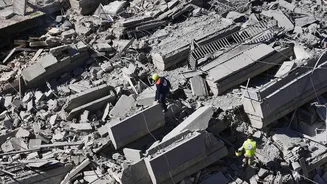
The report also found that Iranian strikes damaged or destroyed hundreds of buildings and structures at US bases in Kuwait, Bahrain, Qatar, the United Arab Emirates, Saudi Arabia, Iraq, Oman and Jordan.
The Pentagon’s inspector general previously estimated that the war had cost $33.4 billion through June 19, including damage to US diplomatic facilities. It also reported damage to aircraft, refueling planes and drones.
Missile Stockpiles Could Take Five Years To rebuild
Much of the war’s cost has come from missile defenses. The CBO estimated that replacing weapons used so far would cost $21.7 billion, including $13.1 billion for missile-defense interceptors.
The report warned that rebuilding US stockpiles of Patriot, THAAD and Navy interceptors could take at least five years, even if production is increased.
The CBO said the shortage could be “especially problematic” in a hypothetical conflict involving China and Taiwan, where the US could face large numbers of ballistic and cruise missiles.
The report also stated that the war had led to the “large expenditure of missile defense interceptors,” leaving the US with reduced interceptor inventories for several years.
The Pentagon did not cooperate with congressional financial auditors, forcing the CBO to rely heavily on publicly available information.
White House spokeswoman Anna Kelly described President Donald Trump’s attacks on Iran as “decisive action” and said the US had “more than enough munitions, ammo, and stockpiles to serve all of the Commander-in-Chief’s strategic goals and beyond.”
Chief Pentagon spokesperson Sean Parnell also disputed reports of shortages, saying, “We have everything required to strike at the time and place of the president’s choosing.”
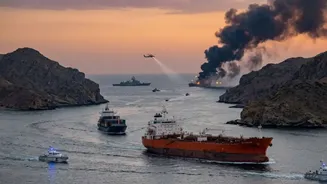
The rising cost of the war has also affected energy prices. Disruptions linked to attacks in the Strait of Hormuz pushed Brent crude from around $64 a barrel before the fighting to a peak of $103.
The CBO said the conflict could leave inflation 0.5 percentage points higher than previously expected by early 2027, while short-term interest rates were already around 0.2 percentage points higher than they otherwise would have been.
The report did not include the cost of recent attacks on commercial vessels in the Strait of Hormuz or strikes on US military installations in the region. It also excluded borrowing costs linked to financing the war, which could add tens of billions of dollars to the total.