








What is the story about?
Film photography is experiencing a resurgence, particularly among younger generations who appreciate its distinct aesthetic and analog characteristics.
Despite this growing interest, many younger photographers find analog cameras more challenging to operate than the digital devices they are accustomed to, leading to questions about key concepts such as ISO and f-stop settings.
Introduction to Film Photography
George Walker IV, an Associated Press photojournalist based in Nashville, has shared insights into the fundamentals of film photography for this week's One Tech Tip.Having joined the AP in 2023 after three decades with The Tennessean, Walker emphasizes that shooting on film encourages photographers to be patient and deliberate, stating, “It forces me to be patient and concentrate to make the pictures that matter.”
Understanding Film and Its Mechanism
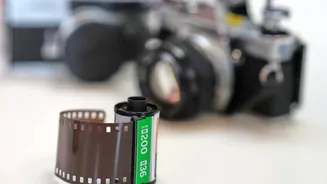
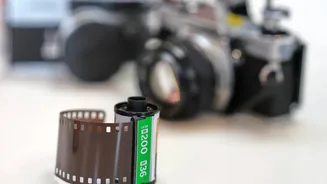
Prior to the rise of digital cameras in the early 2000s, photography primarily utilized physical film rather than electronic files.This photographic film is a light-sensitive material that captures images by exposing a silver-halide coating through the camera lens, resulting in a latent image that can be developed into prints.
Many enthusiasts are drawn to the unique, grainy quality of film images, which contrasts with the overly polished look of digital photographs, and view film photography as a refreshing antidote to digital fatigue.
Essential Aspects of Film Photography
Most consumer cameras use 35 mm film, which can be purchased at photo shops or online, although drugstores may have limited options.When selecting film, it is crucial to consider the ISO rating, which indicates the film's sensitivity to light; higher ISO numbers are suitable for low-light conditions, while lower ratings are ideal for bright settings.
For beginners, black and white film is often recommended as it is more forgiving in terms of exposure and encourages focus on composition and lighting.
Choosing the Right Film Camera
Currently, new film cameras are limited to a few point-and-shoot models, but a variety of vintage options are available on platforms like eBay and in camera shops.Prospective buyers should consider models from established manufacturers such as Canon, Nikon, Pentax, Olympus, and Minolta, which were prominent before the digital era.
Types of Film Cameras
Point-and-shoot cameras are compact and user-friendly, typically offering minimal controls.In contrast, single-lens reflex (SLR) cameras provide manual settings and interchangeable lenses, making them ideal for those who wish to learn and experiment, though they may be more intimidating for novices.
A general guideline is that the best camera is the one you have with you.
Loading Film into the Camera
To load film into a manual camera, open the back and insert the film leader into the designated slot on the right spool, then use the winding lever to ensure it is secured properly.Point-and-shoot cameras typically feature automatic winding, with instructions labeled inside for proper film placement.
Once loaded, it is essential to keep the camera back closed until all exposures are completed to avoid ruining the film.
Mastering Camera Functions
For users of manual cameras, understanding how to adjust exposure by changing shutter speed and aperture (f-stop) is critical.The f-stop controls the amount of light hitting the film, with lower numbers allowing more light, while shutter speed determines the duration of exposure.
F-stops also influence depth of field; smaller f-stop values result in a greater area of the image being in focus.
Fast shutter speeds are beneficial for capturing action, while a light meter in manual cameras assists in achieving correct exposure.
Focusing manually requires practice, particularly when photographing subjects such as people or animals, where eye focus is paramount.
Ultimately, the fundamental principle remains: fill the frame with the desired subject, drawing inspiration from renowned photographers like Gordon Parks and Ansel Adams.
Processing Film After Shooting
Once a roll of film is completed, it can be processed at local drug stores, photo labs, or sent to online services, with processing times and costs varying based on numerous factors.Photographers can receive negatives, which are essential for creating additional prints, although many now prefer digital files over physical copies.
Concluding Remarks
For those interested in exploring the world of film photography, understanding these basic concepts can significantly enhance the experience.Readers are encouraged to suggest topics for future editions of One Tech Tip by contacting onetechtip@ap.org.