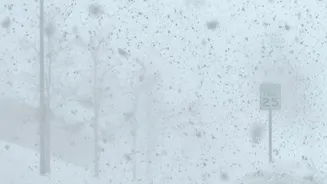









More than 450,000 people in north-central Ohio were given only minutes to prepare after the National Weather Service (NWS) issued a sudden snow squall
warning on Tuesday afternoon. The alert, issued shortly before 4 PM ET by the NWS office in Cleveland, followed radar and webcam detections of a dangerous snow squall impacting counties including Huron, Erie, Lorain, Richland, Ashland, and Crawford. By 4:45 PM ET, additional snow squall warnings expanded the affected area to more than 1.7 million people, including residents of Cleveland. The NWS warned that rapid drops in visibility and slick road conditions could quickly lead to accidents, urging people to avoid or delay travel if possible. The warnings specifically highlighted rapidly deteriorating travel conditions on major roadways, including Interstate 71, Interstate 90, the Ohio Turnpike, US Routes 20, 30, and 224, and Ohio State Route 2. Drivers were advised to exit highways, park safely away from traffic, and wait for the squall to pass before resuming travel. The warning comes amid deteriorating winter conditions across the eastern US, with another winter storm likely to hit the East Coast later this week, potentially intensifying into a bomb cyclone.
What Is a Snow Squall?
A snow squall, according to the NWS, is an intense snowfall that develops quickly and has the potential to cause an abrupt whiteout. Roads can become icy in a matter of minutes during these events, which typically last an hour, especially when the temperature drops.
Even though there is typically little snow accumulation, typically an inch or less, snow squalls are especially dangerous for drivers due to strong winds, dropping temperatures, and drastically reduced visibility. Snow squalls have been connected to fatal traffic accidents for a long time, according to the NWS.
What Does a Snow Squall Warning Mean?
When a snow squall warning is issued, it indicates that a squall is either approaching or has already begun. These alerts are short-fused, highly localized, and intended to deliver life-saving information, much like tornado warnings.
Snow squall warnings in parts of Ohio were expected to remain in effect until around 5 PM ET Tuesday, depending on location. As conditions shifted eastward, NWS Cleveland continued issuing additional warnings and urged residents to monitor local forecasts closely.