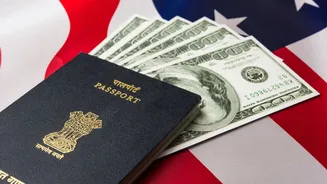






The United States has moved closer to revising wage rules governing H-1B visas and employment-based Green Card sponsorship, a shift that could materially
affect Indian professionals planning to work in America. A proposed regulation from the Department of Labor has cleared review at the Office of Management and Budget, the final administrative step before publication for public comment. While the exact regulatory text is yet to be released, immigration experts anticipate tighter prevailing wage benchmarks. Prevailing wages determine the minimum salary US employers must pay foreign employees based on occupation and geographic location. Any upward revision directly raises the cost of sponsorship under both the H-1B and Green Card PERM sponsorship process. For Indian professionals — who dominate H-1B approvals — even incremental wage recalibration can influence employer appetite for new filings. According to USCIS data for fiscal 2024, approximately 71% of all approved H-1B petitions, including extensions, were granted to Indian nationals. That translates to roughly 2.8 lakh approvals, underscoring India’s outsized stake in US immigration updates H-1B developments. Chinese nationals accounted for a distant second, at around 12%.
What Is Changing In The H-1B Wage Framework?
The Department of Labor had previously attempted a sharp wage revision in October 2020 during Donald Trump’s first term. That rule increased required wages by 40% to 100% across several categories before being struck down in court following challenges by business groups. The current proposal is seen as more measured but could still increase salary thresholds across technology, healthcare and engineering roles.
If implemented, the revised wage structure may apply to H-1B cap FY2027 beneficiaries. USCIS H-1B registration 2026 for the upcoming season is scheduled to open between March 4 and March 19, placing employers and aspirants in a narrow window of policy uncertainty. Immigration attorneys expect the public comment period to last between 30 and 60 days, though it may be compressed to expedite finalisation.
The proposal also intersects with discussions around replacing the random H-1B lottery with a weighted selection model. Under H-1B weighted selection, candidates offered higher prevailing wages would receive stronger odds of selection. This shift, combined with potential wage hikes, could structurally favour senior-level professionals over entry-level applicants.
What Indians Should Watch Closely
For Indian applicants, the immediate concern is employer strategy. Sponsoring companies are reportedly cautious about expanding hiring under the H-1B cap given regulatory unpredictability and rising compliance costs. In parallel, a proposed $100,000 H-1B visa fee for certain overseas beneficiaries remains under legal challenge, adding another layer of hesitation.
Green Card applicants are also monitoring developments closely. Changes to prevailing wage calculations directly affect the PERM labour certification stage, which forms the foundation of most EB-2 and EB-3 Green Card filings. Any recalibration could raise the minimum salary required for employer sponsorship, especially in metropolitan hubs.
Consular processing in India has slowed due to expanded social-media vetting policies, further complicating timelines. Meanwhile, categories such as EB1A approvals 2026 continue to attract interest from highly skilled professionals seeking faster routes to permanent residency. The broader immigration landscape — including discussions around a “Gold Card visa” and DHS H-1B changes — suggests that structural reform remains firmly on Washington’s agenda.