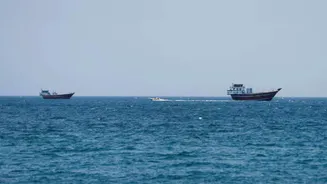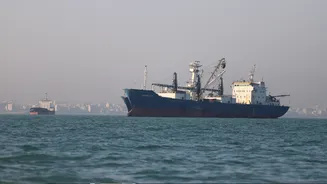







Iran and Oman have exchanged proposals over the future management of the Strait of Hormuz as both countries seek to address ongoing disputes surrounding
one of the world's most strategically important waterways. According to Reuters, Oman has proposed a joint regional mechanism to manage the strait, backed by Gulf states, under which ships would make voluntary contributions rather than pay mandatory transit fees. The proposal would prevent Iran from exercising sole control over the waterway and is modeled on the Strait of Malacca, where Indonesia, Malaysia and Singapore invite ships to make voluntary payments that fund navigation, environmental protection and search-and-rescue operations. The proposal is aimed at helping restore global trade disrupted by the closure of the Strait of Hormuz during the U.S.-Israeli war on Iran. However, Tehran has said the waterway cannot simply return to the pre-war arrangement under which shipping moved freely.
Iran Rejects Equal Transit Route Proposal
Iran's Deputy Foreign Minister for Legal and International Affairs, Kazem Gharibabadi, said Tehran has rejected an Omani proposal calling for an equal division of transit routes between the two countries, arguing that it does not address Iran's security concerns.
Instead, Gharibabadi said Iran has proposed that it manage shipping through its side of the strait while Oman would oversee part, but not all, of the opposite traffic lane.
"The Omanis are now suggesting three lines for the maritime traffic: one that runs through Iran's territorial waters, an international one, and one through Omani territorial waters," Al Jazeera's Resul Serdar reported from Tehran, adding that sources indicate Iran is showing some flexibility despite its public statements.
A U.S. official, however, rejected the idea of ships paying tolls or fees, telling Reuters that the Strait of Hormuz is an international waterway that should remain free of Iranian control or restrictions and that any agreement under discussion would not include tolls.
Trump Warns Strikes Could Resume
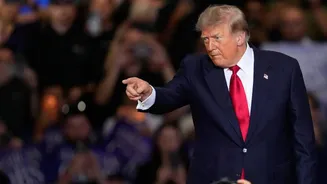
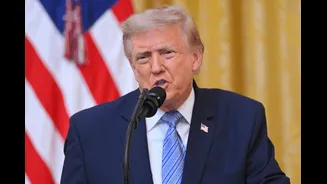
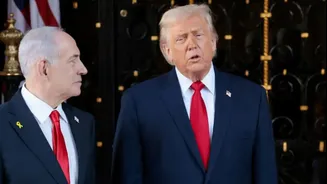
President Donald Trump said there were "good talks" underway with Iran but warned the United States would resume military strikes if negotiations fail.
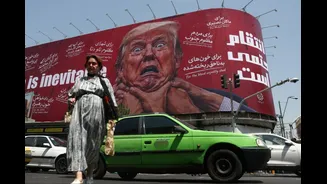
Trump called off a nearly two-week U.S. bombing campaign over the weekend after regional mediators pushed for a diplomatic solution and a return to a memorandum of understanding signed in June that would allow shipping to resume through the Strait of Hormuz. Iran, however, has denied seeking to resume negotiations with the United States.
Meanwhile, Gulf Cooperation Council foreign ministers met via video conference to discuss developments in the conflict and ways to strengthen cooperation on freedom and safety of navigation through the waterway.
Iran's joint military command also rejected a proposal attributed to Trump that compensation for damaged vessels be paid from frozen Iranian assets, warning that any country or company accepting such payments would be denied passage through the Strait of Hormuz.
Trump reiterated that he would prefer a negotiated outcome but said he remained prepared to strike additional Iranian targets if no agreement is reached. He also repeated his threat to target Iran's Pickaxe Mountain facility, saying, "If we don't make a deal, we'll take it out very easily."