





What is the story about?
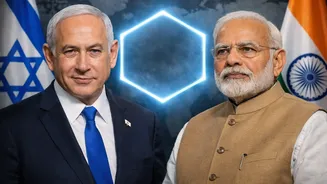
Ahead of Prime Minister Narendra Modi's high-profile visit, Israeli Prime Minister Benjamin Netanyahu has proposed a new geopolitical alliance, termed
the "hexagon of alliances," aimed at countering radical groups in the Middle East. India has been named a key partner of this alliance along with Greece and Cyprus, among other potential nations. Speaking on Sunday, Netanyahu described the proposed “hexagon of alliances” and said that Israel had outlined plans to form the new regional bloc, with India, along with other unnamed Arab, African and Asian states. He said together, they would unite to collectively stand against what he called “radical” adversaries.
What is the Hexagon Alliance?
The statement, issued by Israel’s Foreign Ministry on February 22, comes amid rising geopolitical tensions in the region. Netanyahu seeks to replicate what he calls Israel’s “victories” against the “Shia axis”, also known as the “axis of resistance”, an informal, Iran-backed network of groups that oppose Israeli and Western influence in the Middle East, according to a report by Al Jazeera.
Strains between Israel and Iran remain high. Meanwhile, Pakistan and Saudi Arabia signed a Strategic Mutual Defence Agreement in September 2025, a pact some analysts have compared to an “Islamic NATO.” Turkey has also indicated possible interest in joining the arrangement.
“In the vision I see before me, we will create an entire system, essentially a ‘hexagon’ of alliances around or within the Middle East,” Netanyahu said.
“The intention here is to create an axis of nations that see eye to eye on the reality, challenges, and goals against the radical axes, both the radical Shia axis, which we have struck very hard, and the emerging radical Sunni axis.”
No government has publicly endorsed the plan so far.
Also Read: Defence, Security, Trade Pact? PM Modi in Israel Today - What's on the Agenda
Why India may be on the fence
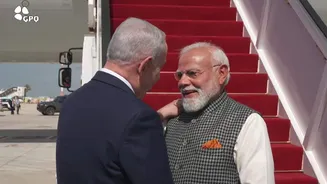
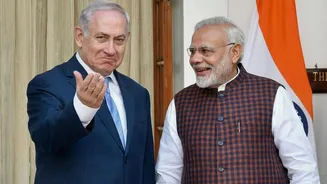
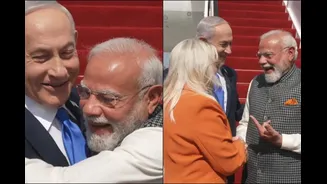
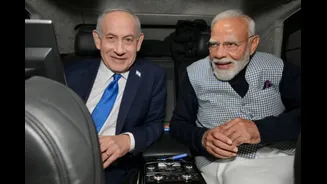
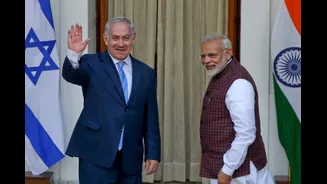
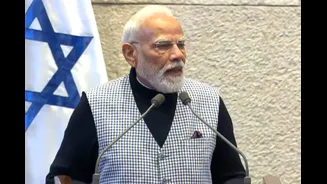
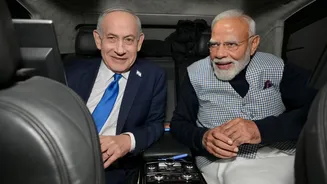
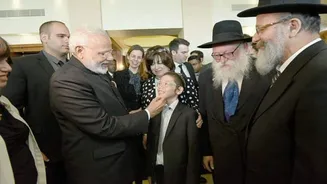
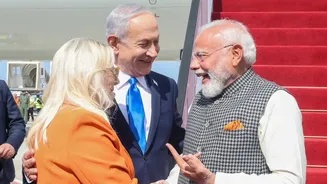
Netanyahu’s remarks come as Prime Minister Narendra Modi prepares to visit Israel, where he is expected to address the Knesset and hold wide-ranging talks. PM Modi is scheduled to meet Netanyahu to strengthen bilateral cooperation in defence and security, trade and economic relations, and innovation. He will also call on Israel’s President Isaac Herzog.
But when it comes to Netanyahu's "hexagon" alliance, India may sit on the fence. As a founding member of the Non-Aligned Movement, New Delhi has historically avoided rigid bloc politics, while simultaneously engaging with China, Russia and the United States.
India maintains strong ties across the Gulf region, which is home to a large Indian diaspora that sends billions of dollars in remittances back each year. New Delhi also has close relations with Iran, often describing the relationship as “civilisational” in nature, while simultaneously deepening its strategic cooperation with Saudi Arabia.
These overlapping ties may be a reason why New Delhi is likely to tread carefully, balancing its strategic interests without fully committing to any one bloc.