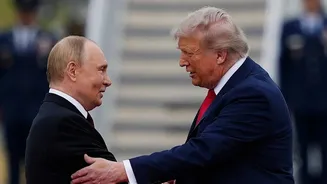









In a pivotal de-escalation amid the grinding Ukraine war, the United States and Russia announced Thursday an agreement to revive military-to-military dialogue
channels, just hours after New START formally expired. The pact, forged in the wake of intense Ukraine talks involving envoys like Steve Witkoff and Jared Kushner, commits both nuclear giants to upholding the treaty's limits on deployed warheads (1,550) and launchers (700) for now. President Donald Trump's team hailed it as "pragmatic steps toward stability," while Moscow echoed readiness to extend voluntary restraints up to a year. This breakthrough caps months of backchannel diplomacy, from Moscow summits to UAE trilateral huddles with Ukrainian reps. Kremlin aide Dmitry Peskov confirmed the dialogue reboot, stressing it predates full treaty lapse. "We're open to mutual limits if the US reciprocates without missile defense hikes," Peskov told reporters, nodding to Vladimir Putin's September 2025 offer. For Trump, fresh off inauguration, it's a signature flex—balancing Ukraine aid with Russia reset, as recent Florida and Berlin sessions yielded POW swaps but no sovereignty deal. The Ukraine conflict, now in its fourth year, looms large: Russian gains like Pokrovsk underscore Moscow's leverage, while Kyiv pushes NATO-like US guarantees sans boots on ground. Military hotlines, dormant since 2022 invasion, could avert misfires in the Black Sea or skies. Analysts see this as Putin's nod to Trump's dealmaking, potentially paving for Zelenskyy-Putin face-time.
New START Lifeline Amid Nuclear Shadow
New START's sunset—extended once to 2026—leaves a void, but Thursday's nod keeps caps intact short-term. Putin warned last fall ditching it outright would torpedo nonproliferation; Washington, eyeing Russia's Burevestnik missile tests, seeks verification revival. "Voluntary adherence buys time for talks," said Greg Weaver, ex-US strategist, in an Atlantic Council brief. IRGC-style Gulf tensions pale here—Hormuz patrols meet Hormuz patrols in stakes.
US Army Secretary Dan Driscoll's recent Kyiv visit scoped endgame strategies, blending intel shares with drone buys. Rubio called prior Ukraine huddles "productive yet intricate," hinting at $90B arms via Europe. Russia claims no concessions yet, but fresh victories buy negotiation room. Critics decry it as appeasement; supporters, risk reduction. As one NATO official griped anonymously to CNN, Moscow wants Ukraine "weakened maximally."
Trump-Putin chemistry fuels optimism—40-minute calls birthed senior negotiators. Yet hurdles persist: inspections stalled since 2023, Russia's Poseidon torpedo advances. This dialogue reboot, post-UAE resumption, signals momentum without euphoria.
Ukraine War Paths Forward Tested
Dialogue revival spotlights Trump's "wait-and-see" on Zelenskyy-Putin bilaterals, prioritizing their meet first. White House vows "robust" security pacts akin to NATO Article 5, eyeing air support over troops. Prisoner exchanges from latest rounds offer goodwill; broader ceasefire dangles.
Putin, in fatigues amid advances, hosted US delegations sans full Ukrainian buy-in. Rustem Umerov, Kyiv's security chief, joined Florida talks—progress vague, work "substantial." For the US military and Russian counterparts, reopened lines mean real-time deconfliction, vital as drones clash over Donbas.
This accord threads nuclear needle amid Ukraine quagmire: voluntary START holds the line, talks probe peace. Trump eyes legacy win; Putin, strategic pause. As millions watch, today's pact whispers endgame—or just another chapter.