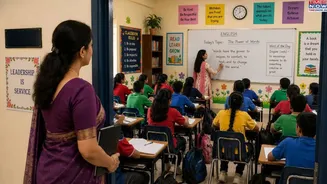





"Today’s children are undoubtedly smarter, sharper and far more aware of the world than many previous generations were at their age. They think globally,
they dream big, and they are exposed to ideas, careers and conversations that we could not even imagine as children," says a Noida school principal who has spent over 25 years in the education system watching generations of students grow up within school walls and step into adulthood. "But if I am being completely honest, I also see that when things go wrong, many of them collapse emotionally much faster than children earlier did." She says what worries her is not the intelligence gap, but the resilience gap. "I hear children speak of startups, global universities, AI, content creation, entrepreneurship, social impact and honestly, their ideas are brilliant. This generation thinks without borders. Their confidence in imagining possibilities is remarkable. But the moment something cracks be it poor marks, rejection, friendship issues, failure in a competition, even social exclusion, many struggle deeply to recover from it." According to her, this is also one of the reasons schools today are investing far more heavily in mental health support systems. "I have almost doubled the number of counsellors in school because anxiety, panic attacks, emotional breakdowns and stress-related issues are no longer isolated cases. We are seeing them far more frequently than before. Earlier too children struggled emotionally, but now the intensity feels different. Children are carrying fear much earlier in life." And that fear, she says, is not limited to children alone. "Parents today are also parenting from a space of fear. Somewhere, the rising conversations around mental health crises, self-harm and suicide have deeply impacted families. Suicide has become a looming word in everybody’s mind. Parents are terrified of pushing children beyond a point because they fear what emotional consequence it may trigger. So many parents would rather cushion the child than risk distress." She pauses before adding that while the intention comes from love, the outcome may not always help the child long term. "Children are being protected from discomfort at every level. If the weather becomes slightly difficult, many stay home. And I am not even blaming parents alone anymore because now DMs themselves often shut schools during heatwaves, cold waves or heavy rain. I understand the logic completely and I know these are well-intended decisions. But somewhere the subconscious messaging also becomes that children must constantly be shielded from difficulty, while the adults around them continue going to work, travelling, functioning." According to her, the cushioning extends beyond weather or academics. "Parents want teachers to be endlessly sensitive, endlessly accommodating. I have had parents come aggressively complaining that their child is being bullied, and after proper investigation, we discovered their own child was the one bullying others. Sometimes children are not being taught how to sit with discomfort, accountability or consequences." What concerns her most is the increasing reluctance to repair things once they break. "Whether it is academics, ambitions, friendships or relationships, there is a growing tendency to give up quickly. There is so much promise in this generation, genuinely so much promise, but there is also a low tolerance for setbacks. Earlier generations perhaps had fewer opportunities but slightly thicker emotional skin. Today’s children have extraordinary exposure and opportunities, but emotionally many are operating from a place of fear -- be it fear of failure, fear of rejection, fear of not being enough." And that, she says, is where both schools and parents need balance. "Children absolutely need empathy and emotional support. Mental health is real and serious. But resilience also has to be taught alongside sensitivity. Because life will eventually expose them to disappointment, discomfort and unpredictability. If children grow up believing every difficult emotion is dangerous, they may never learn that they are actually capable of surviving hard things too."