









What is the story about?
NEW YORK (AP) — Many consumers may not realize that their favorite jeans have undergone extensive processing across various countries, from cotton farming
to factories. These processes often involve stonewashing, sanding, and chemical treatments, which contribute significantly to environmental degradation. As the fashion industry faces increased scrutiny for its impact on climate change, brands are marketing their denim as sustainable, claiming to use regenerative cotton and low-water manufacturing techniques. However, determining the authenticity of these claims is complex due to the lack of universal sustainability standards.
The Journey of Cotton to Denim
Most jeans are primarily made from cotton, a crop that demands considerable water, fertilizer, and pesticides. Beth Jensen, chief impact officer at the nonprofit Textile Exchange, notes that many brands lack transparency regarding their cotton sources. Given that denim production often spans multiple countries, tracking labor conditions can be equally challenging.As environmental concerns rise, some brands are exploring regenerative cotton solutions that promote soil health and biodiversity. However, Jensen cautions that what works in one region, such as California, may not be applicable in other countries like India or Australia due to varying climates.
Energy and Labor Intensity in Denim Production
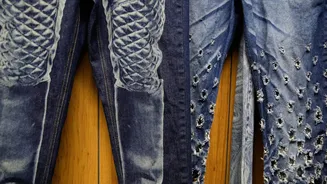
Once harvested, cotton is spun into yarn and dyed, a process that typically requires significant water and chemicals. The denim is then woven into fabric and constructed into jeans, often undergoing finishing treatments to achieve various styles and textures. Bill Curtin, owner of BPD Washhouse in New Jersey, explains that denim-finishing processes can be categorized into 'wet' and 'dry' methods.The wet process utilizes water, chemicals, and treatments to lighten or tint the denim, historically employing pumice stones for a worn look. Many facilities are now transitioning to enzyme-based alternatives and ozone technologies that reduce water consumption. Conversely, the dry process creates texture through laser technology or manual methods, which are more efficient and less labor-intensive.
Additionally, stretchy jeans often incorporate synthetic materials such as polyester or elastane, which can release microplastics during washing.
Challenges in Sustainable Denim Production
Fashion designer Maria McManus faced significant challenges in incorporating denim into her low-impact line, primarily due to the washing process's environmental impact. She ultimately opted to use dark, raw denim from Japan, bypassing the wash stage entirely to maintain her sustainability standards.McManus later collaborated with Agolde, a larger brand recognized for its commitment to regenerative cotton farming. This partnership provided her access to essential infrastructure, including connections to certified cotton farmers and sustainable dyeing processes. However, she acknowledges that even these sustainable methods are fraught with difficulties, including the risk of crop failures and verification challenges within supply chains.
Despite these hurdles, McManus emphasizes that the price of sustainable jeans reflects the small production runs necessary for ethical practices, with her jeans priced at nearly $700.
Guidelines for Purchasing Sustainable Jeans
Experts advise consumers to scrutinize vague sustainability claims and seek brands that provide comprehensive information about their sourcing and manufacturing processes. Dana Davis, a strategic fashion adviser, encourages shoppers to look beyond individual product pages to evaluate a brand's overall commitment to labor rights and sustainable practices.While certifications can assist in verifying sustainability, Davis warns that no single label guarantees it. The B Corp certification is one credible option, as it assesses companies' social and environmental performance. Additionally, some materials, like lyocell, may come from sources verified by the Forest Stewardship Council (FSC).
One of the simplest ways to lessen denim's environmental impact is to purchase fewer jeans, wear them longer, wash them less frequently, and consider secondhand options. According to a life cycle assessment by Levi Strauss & Co., if 34.2 million people bought secondhand jeans instead of new ones, it could prevent approximately 1.5 billion pounds of carbon dioxide emissions.
Jensen concludes, “The most sustainable thing you can do is use a product that’s already been made.”