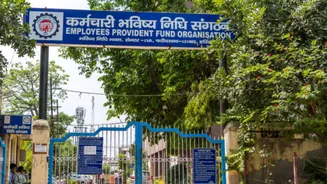








The EPF Officers' Association has called on the Ministry of Labour & Employment to strengthen the Employees' Provident Fund Organisation (EPFO) by recruiting
more technology professionals and domain experts. According to the association, the retirement fund body cannot efficiently operate as a modern digital organisation without a robust in-house technology team. In a letter addressed to the Labour Minister, the association highlighted what it described as a key policy failure, arguing that EPFO's digital ambitions have outpaced its internal technical capabilities. The body pointed out that the Information Services Division (ISD), which is responsible for EPFO's technology infrastructure, has not witnessed any direct recruitment for more than two decades. It said the last recruitment drive for the division took place in 2004, while several senior officials, including joint directors and deputy directors, have either retired or resigned without being replaced. 'No Full-Time CTO Hired Yet' The association further claimed that EPFO has failed to appoint a full-time Chief Technology Officer (CTO) for the last three years, leaving its technology division severely understaffed. While acknowledging the role of external software development agencies, the association argued that outsourcing alone cannot guarantee successful implementation. It maintained that external expertise must be supported by qualified in-house professionals capable of supervising projects, providing technical guidance and evaluating outcomes. Without such internal capacity, it warned, software quality and system performance could suffer. CITES Rollout Faces Questions Over Pending Claims The association also criticised the implementation of the Centralised IT Enabled System (CITES), which was launched to automate claim processing and significantly reduce settlement timelines. According to the officers' body, the new platform has not achieved its intended objective. “Unfortunately, the experience till now has been quite the opposite. Lakhs of auto claims were kept pending in the system for more than 20 days, with no explanation to either the field offices or to the members,” it noted. The association added that field offices have been left to deal with an increasing number of complaints through grievance portals, social media channels and direct interactions with subscribers. It also said the growing volume of grievances received on the Central Board of Trustees (CBT) Chairman's social media handle reflects rising dissatisfaction among EPFO members. It further noted that the CITES project, assigned to the Centre for Development of Advanced Computing (C-DAC) in January 2023 with an expected completion timeline of 10 months, experienced significant delays before being introduced in phases in July 2026. Outdated Staffing Norms Add To Operational Pressure Apart from technology concerns, the association flagged manpower shortages across EPFO offices. It said the organisation's last comprehensive workload assessment was conducted during 2016-17, while staffing approvals continue to be based on sanctioned posts dating back to March 2008. Despite a sharp rise in EPFO's subscriber base and responsibilities over the past decade, manpower has not kept pace, the association said. Major metropolitan offices, including Mumbai, Delhi, Bengaluru and Gurugram, are reportedly handling significantly higher workloads using outdated staffing norms. The body argued that this gap has increased operational pressure on employees and contributed to growing member grievances. The association also questioned the appointment of generalist officers without adequate familiarity with EPFO's functioning. It noted that the Central Board of Trustees has statutory powers under the EPF & MP Act, 1952 and the Code on Social Security, 2020 to appoint sufficient personnel for efficient administration. According to the association, those powers have not been fully utilised despite repeated requests to define staffing norms and continuously upgrade technology. It added that delays in sanctioning manpower, coupled with reliance on manual certification for several processes, undermine the objective of automation and reduce the effectiveness of technology-led reforms.