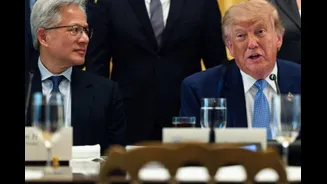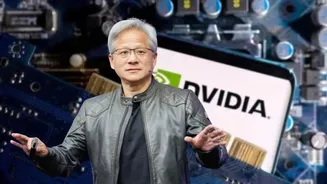







Nvidia is facing the prospect of a credit rating downgrade after S&P Global Ratings raised concerns about the chipmaker’s leadership decisions, board oversight
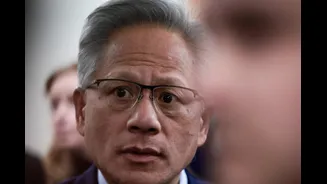
and governance standards. The rating agency has placed the company's AA credit rating under review with negative implications following the controversial departure and subsequent reinstatement of Chief Executive Officer Jensen Huang. The review introduces fresh uncertainty for one of the most influential companies in the artificial intelligence industry. While S&P expects any potential downgrade to be limited to a single notch, it has warned that a more significant deterioration could follow if Nvidia's long-term business prospects suffer. The development comes at a particularly sensitive time for the AI sector, where companies are spending heavily on computing infrastructure and relying on access to financing to sustain their expansion. S&P Global Ratings has initiated a 90-day CreditWatch review, signalling that Nvidia's AA rating could be lowered. The agency's concerns stem from developments surrounding Huang's exit and return, alongside questions about the company's ability to maintain effective corporate oversight. Explaining its decision, S&P said: “News regarding the CEO and questions regarding potential export control violations have exposed vulnerabilities in Nvidia’s management and governance framework, especially in regard to its board structure, composition, and effectiveness,” S&P said. The controversy has raised questions about how Nvidia's board handled the leadership crisis and whether its governance framework is sufficiently robust to manage regulatory and reputational challenges. Huang was reinstated by the board on Monday, less than two weeks after leaving the company amid a scandal involving multiple extramarital relationships. Reports included allegations involving a subordinate and a woman who has been investigated by US authorities over suspected espionage activities on behalf of China. His return has attracted attention because of the departure from conventional corporate governance practices it represents. Nvidia has also faced scrutiny over its China-related business connections and potential compliance issues involving US restrictions on semiconductor exports. Why A Downgrade Could Matter For The AI Industry A lower credit rating could increase Nvidia's borrowing expenses, potentially affecting its financial flexibility as it navigates the enormous capital requirements of the AI boom. Nvidia occupies a central position in the artificial intelligence supply chain. Its processors power data centres operated by hyperscalers and emerging cloud infrastructure providers, which subsequently offer computing resources to AI developers, including Anthropic PBC. This makes Nvidia more than a semiconductor supplier. Its products and financial influence are closely connected to the wider expansion of AI infrastructure, meaning developments affecting its creditworthiness could attract attention across the technology and debt markets. According to Bloomberg index data, Nvidia has approximately $32.5 billion in bonds included in the US high-grade corporate bond index. Huang's Return Fails To End Corporate Uncertainty The leadership controversy has created volatility in Nvidia's shares and bonds over recent weeks. Investors have been closely monitoring the situation because Huang's position is considered important to the company's future and the broader development of AI infrastructure. US President Donald Trump supported Huang's return, arguing that his management did not pose a national security threat. Huang has apologised to employees and disclosed that he is receiving therapy. However, the controversy could continue to generate headlines, particularly as he is expected to appear at congressional hearings next month. Moody's Also Flags Governance Risks S&P's latest action follows a similar move by Moody's Ratings, which recently revised Nvidia's credit outlook to stable from positive. Moody's cited governance-related concerns following Huang's departure. The revised outlook indicates that the company's Aa1 rating, the agency's second-highest investment-grade category, is unlikely to improve over the next 12 to 18 months. On Wednesday, Moody's maintained its stable outlook, noting that “governance and regulatory uncertainty remains” following Huang's return. The assessment suggests that reinstating Huang has not automatically resolved the concerns surrounding Nvidia's corporate oversight. Investor anxiety has also become visible in the derivatives market, where the cost of protecting Nvidia's debt against default has climbed sharply. On Wednesday, the five-year credit default swap spread for Nvidia increased by as much as six basis points to 147.27 basis points annually, setting a new intraday record, according to ICE Data Services.