







India’s crude oil purchases climbed to a 2026 high in September as a sharp revival in supplies from Gulf producers helped lift total imports to 5.26 million
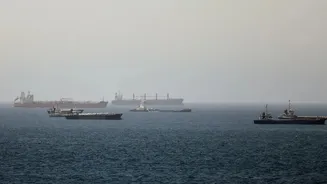
barrels per day (mbd). The increase comes despite continuing risks around the Strait of Hormuz, with more crude now being moved through the strategic waterway using alternative shipping arrangements. Iraq emerged as India’s second-largest crude supplier during the month, behind Russia, marking the first time it has occupied that position since the US-Iran conflict began in February. The jump in Gulf supplies has also raised questions over the extent to which Iran’s control of traffic through the Strait of Hormuz is affecting oil flows. Dozens of large crude carriers are reportedly making the journey through the Strait of Hormuz with their Automatic Identification System (AIS) transponders turned off. After crossing the waterway, the vessels transfer crude through ship-to-ship (STS) operations in UAE and Omani waters. The cargo is subsequently transported to customers by other vessels, while the original tankers return to Gulf terminals to load additional crude. This arrangement has helped restore the flow of Middle Eastern oil to India at a time when refiners have faced uncertainty over supplies. The development is important for Indian refiners because several domestic plants are designed to process crude grades originating from the Middle East. "Increased Middle East barrels availability not only helps restore some of the lost supply but also provides access to crude grades with relatively strong middle-distillate yields, which align well with India's domestic product demand slate," said Nikhil Dubey, lead analyst, refining at commodity analytics firm Kpler. Iraq Becomes India’s Second-Biggest Supplier According to Kpler data, Saudi Arabia, Iraq, the UAE, Kuwait, Oman and Qatar together accounted for 39 per cent of India’s overall crude imports in September. Iraq supplied around 525,000 barrels per day (bpd), putting it behind Russia and making it India’s second-largest supplier for the month. Saudi Arabia followed with 517,000 bpd, while the UAE supplied 438,000 bpd. Kuwait also recorded a notable jump in shipments. Its exports to India reached 335,000 bpd in September, the country’s highest supply level to India in a year. The revival is particularly notable because Iraqi and Kuwaiti supplies had almost vanished from India’s import mix for several months following the start of the Iran war on February 28. Indian Refiners Get More Sourcing Flexibility The return of Gulf barrels could give Indian refiners greater flexibility in deciding where to source crude, particularly amid growing pressure surrounding purchases of Russian oil. The recent passage of the Graham Bill has added another layer of uncertainty, as it gives the US president powers to impose tariffs of as much as 100 per cent on India and other countries purchasing Russian crude. "Ample Middle East barrels availability provides Indian refiners with additional sourcing optionality should they need to reduce their exposure to Russian barrels," Dubey said. Hormuz Shipping Strategy Changes Oil Flows National oil companies from Gulf countries, along with some international trading firms, are continuing to arrange tanker movements through the Strait of Hormuz despite reports of attacks on vessels. The shipping workaround involving AIS shutdowns and ship-to-ship transfers has allowed crude to continue moving through the region while reducing the direct visibility of individual tanker movements. Meanwhile, Saudi Arabia’s East-West pipeline has resumed operations after being attacked by the Houthis in September. Crude is once again being loaded at the Red Sea port of Yanbu, providing another route for Saudi oil exports.