


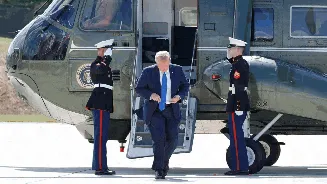
US President Donald Trump on Wednesday announced what he called the "most crushing economic operation ever taken against any country" against Iran, as
efforts to end the more than five-month conflict between the two countries remain deadlocked. In a post on Truth Social on Wednesday, Trump said Iran had "failed to take" the opportunity to reach a deal and would now face "economic warfare and isolation on an unprecedented scale". He also threatened sanctions against any country that continues to do business with Iran. "ANY country that allows its financial institutions, businesses, airports, or government entities to provide any type of lifeline to Iran will itself face TREMENDOUS Economic Consequences," he wrote. "Oil smuggling, swap lines, cash transfers, exchange houses, ship registries, front companies — It all needs to stop NOW. You know who you are. This will be an ECONOMIC D-DAY, and we need all of our Allies to stand with the United States of America to isolate, and defeat, the Iran threat." Trump said Iran was "on the ropes" and claimed his "historic measures" would "cripple" the Iranian economy.
UAE Halts Trade With Iran
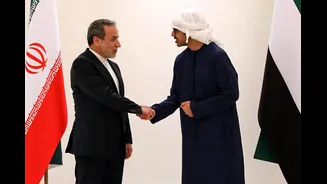
The announcement came a day after the United Arab Emirates said it was suspending trade and financial transactions with Iran until further notice. The UAE said the decision followed what it described as regional escalations that threatened regional and international security. It alleged that Iran had fired two ballistic missiles towards the country.
The UAE's Ministry of Defense said the two missiles fell into the sea. The UAE foreign ministry said on Tuesday that "all trade, commercial exchanges, and financial transactions with Iran have been halted until further notice".
The decision came "in light of regional escalations that undermine regional and international peace and security", it said.
Iran rejected the UAE's Claim
Foreign ministry spokesman Esmaeil Baghaei said the allegation "undermines ongoing efforts to strengthen trust between countries in the region and prevent the escalation of insecurity", according to the semi-official Fars news agency.
Simon Henderson, director of the Bernstein Program on Gulf and Energy Policy at the Washington Institute, told TIME that the impact on Iran's economy could be substantial.
"The UAE is one of the top non-oil trading partners with Iran," he said.
Iranian news agency WANA reported that, as of April, the UAE accounted for 12.5% of Iran's exports and 30.43% of its imports.
Iran's Economy Under Pressure
Iran's economy was already under severe pressure before Trump's latest announcement. The country's currency currently ranks as the least valuable in the world, according to the report, while the Iranian government said in April that the war had caused about $270bn in direct and indirect damage.
US Treasury Secretary Scott Bessent warned last week of "never before seen" economic measures. Analysts have suggested that these could include secondary sanctions against countries such as China that buy Iranian oil, as well as further restrictions on financial transactions.
US and international sanctions and economic pressure previously played a role in bringing Iran to negotiations that resulted in the 2015 nuclear agreement.
Under that deal, Iran agreed to limits on its nuclear programme in exchange for frozen assets and sanctions relief. The agreement was negotiated after then-Supreme Leader Ayatollah Ali Khamenei authorised talks.
Trump later withdrew the US from the agreement and imposed further sanctions.
Since then, Iran has adapted to prolonged economic pressure by developing smuggling networks and expanding alternative markets, particularly for its oil exports.
Strait of Hormuz Remains Key
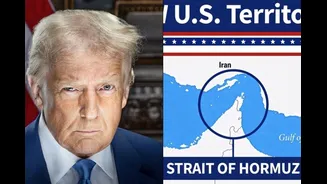
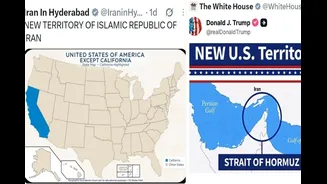
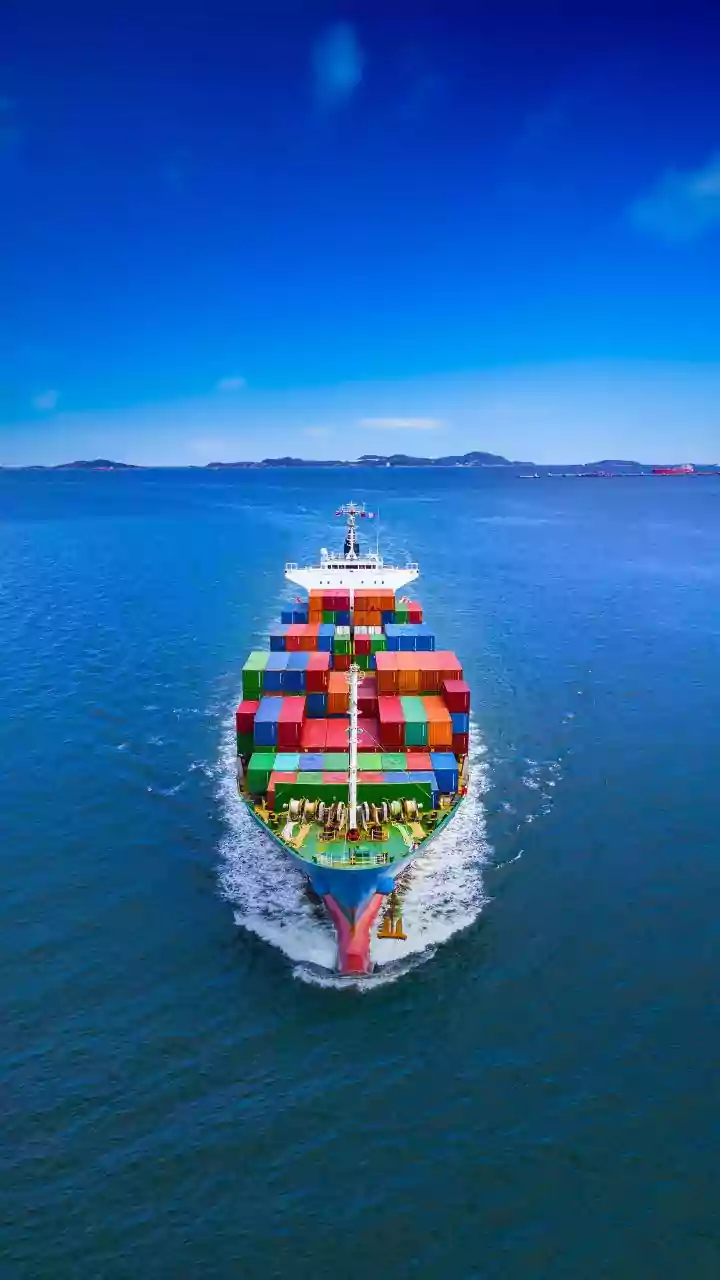
The Strait of Hormuz remains central to the standoff. Iran insists on maintaining effective control of the strategic waterway, while the US Navy continues to blockade it. A small number of ships have continued to pass through, but traffic is down by more than 90% from pre-war levels.
Iran's economy is suffering, but the impact has been gradual, while the government continues to maintain tight control over popular protests.
Since the war began in earnest in February, Iran's economy and industrial sector have contracted for the first time in eight years, according to Esfandyar Batmanghelidj, chief executive of the London-based Bourse & Bazaar Foundation.
He said Iran would face further challenges, including higher inflation and weakness in the job market. "But it won’t lead to a different political outcome," he said.
Some Iranian leaders are concerned about the economic situation and support reaching a diplomatic agreement with Washington more quickly. However, the country's leadership appears united in maintaining effective control over the Strait of Hormuz, which it sees as its main leverage and deterrent against another war.
Iran Turns to Russia and China
Iran has sought to reduce the impact of US and international sanctions by strengthening its economic ties with Russia and China. It sells most of its oil at a discount to China, which has continued to buy Iranian oil despite international sanctions.
Iran also relies on small, independent Chinese refineries, known as "teapots", which are less exposed to US sanctions.
Tehran is betting that keeping the Strait of Hormuz largely closed will increase pressure on Trump and force Washington back to negotiations on terms Iran can accept.
Iran is also counting on growing economic pressure on US allies to encourage them to push Trump towards a deal.
The standoff is taking place against a backdrop of growing pressure on global energy supplies. The global economy is currently missing millions of barrels of oil a day, while strategic stockpiles in the US and Europe have been significantly depleted.
At the same time, continued Ukrainian attacks on Russian refineries have further reduced the amount of oil available on global markets.
The combination of sanctions, disrupted shipping through the Strait of Hormuz and attacks on energy infrastructure is adding to the economic pressure surrounding the conflict, with no clear breakthrough yet in talks between Washington and Tehran.