





What is the story about?
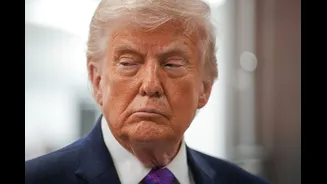
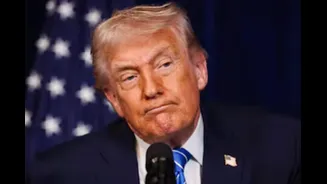
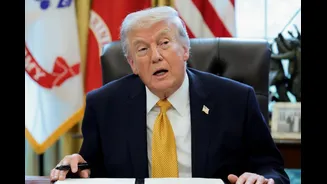
U.S. President Donald Trump asserted in a post on Tuesday that the United States does not require assistance from any allies to counter Iran's influence
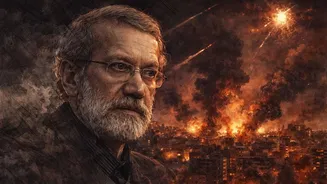
over the Strait of Hormuz. Amid ongoing conflict between U.S.-Israeli forces and Iran, experts warn that maritime navigation through the strait is increasingly perilous due to threats from Iran's missile capabilities. The situation has contributed to rising gas prices, exacerbating economic instability linked to diminished energy supplies. In a related development, Israel reported the elimination of high-ranking Iranian security officials, including Ali Larijani and Gen. Gholam Reza Soleimani, during recent military operations.
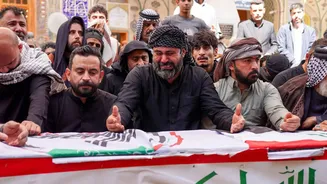
The ongoing conflict has resulted in substantial casualties, with estimates indicating over 1,300 deaths in Iran, more than 900 in Lebanon, and 12 in Israel. The U.S. military has reported 13 service members killed and approximately 200 injured since the conflict's inception.
The Israeli military confirmed that it targeted more than ten Basij force posts in Tehran, as part of its broader operations aimed at destabilizing Iran's capacity to manage internal unrest. An independent monitoring group noted a surge in Israeli strikes against Basij checkpoints.
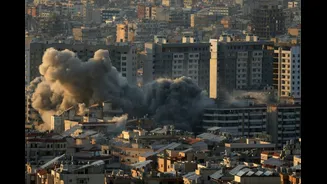
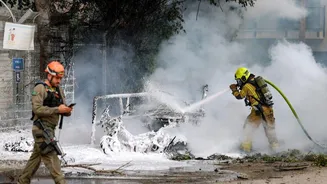
In response, Hezbollah has increased missile fire towards northern Israel, prompting Israeli airstrikes on Hezbollah launch sites in Lebanon. Despite the escalating violence, Israeli emergency services reported no immediate casualties from the recent exchanges.
Anwar Gargash, diplomatic advisor to the UAE president, highlighted the need for assurances that Iran cannot threaten the region with its nuclear and missile programs. He emphasized that the UAE is skeptical of Iran's intentions and expressed a commitment to ensuring the Strait of Hormuz remains accessible.
Meanwhile, the Iranian government has imposed an internet blackout, severely limiting communication from within the country. Iranian American Ariana Afshar noted the difficulties faced by those trying to share perspectives on the war due to these restrictions.
Trump's administration has faced criticism for its media strategy regarding the Iran conflict, with the president urging media outlets to align their coverage with the White House narrative. This week, Trump's media regulator warned broadcasters about potential consequences for airing what the administration deems 'fake news.'
In a separate matter, Iran has sought to relocate its World Cup matches from the United States to Mexico amid ongoing tensions. FIFA has maintained its schedule for the tournament despite Iran's requests, stating that preparations are proceeding as planned.
The U.S. State Department has reached out to international partners to isolate Iran further by designating the Islamic Revolutionary Guard Corps and Hezbollah as terrorist organizations. A recent diplomatic cable advised U.S. diplomats to encourage swift action from countries yet to make such designations.
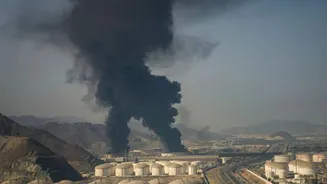
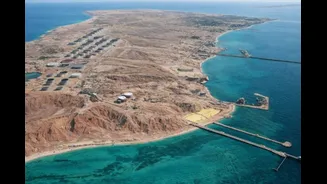
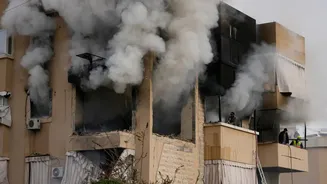
Recent satellite imagery has revealed extensive damage from the conflict, showing destroyed infrastructure in both Iran and U.S. military installations. The U.S. and Israeli forces have targeted a variety of military assets and leadership figures within Iran.
In Baghdad, two drones were intercepted, with a third crashing into the U.S. Embassy compound, igniting a significant fire. This incident reflects the ongoing threat to U.S. facilities in Iraq, which have faced repeated assaults since the outbreak of hostilities.
State media in Iran has broadcast pro-government rallies, warning citizens against participating in traditional celebrations that could lead to protests against the regime. Security forces have increased their presence in urban areas amid fears of unrest.
Turkey's Foreign Minister criticized Israel's actions against Iranian officials, calling them unlawful. He expressed a desire to engage regional partners in discussions aimed at halting the ongoing violence.
The conflict has led to energy shortages in various countries, prompting governments to implement measures to conserve energy and manage rising prices. Analysts predict that the economic fallout could extend beyond the immediate region.
Trump's planned trip to China has been postponed as he continues to advocate for military support to secure the Strait of Hormuz. He expressed disappointment over NATO's lack of assistance in the conflict, suggesting that the U.S. may reconsider its involvement in the alliance.
Following the reported killings of Iranian leaders, Trump remarked that Iran's leadership has been significantly weakened. He described the group as 'evil' and reiterated his administration's commitment to confronting Iran.
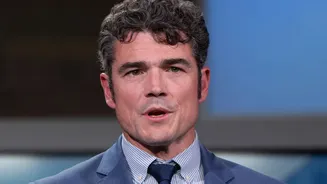
In a recent statement, Trump criticized the outgoing head of the National Counterterrorism Center, Joe Kent, for his perceived weakness on security matters regarding Iran.
Despite the heightened military activity, 15 vessels have successfully transited through the Strait of Hormuz in recent days, indicating that some maritime operations continue amidst the conflict.
EU foreign policy chief Kaja Kallas stated that European nations will not engage in the U.S.-led conflict, emphasizing that the EU was not consulted prior to the outbreak of hostilities.
The White House has refuted claims made by Kent regarding the lack of an imminent threat from Iran, asserting that the decision to engage militarily was based on credible intelligence.
As Israel intensifies its military operations, the situation along the Lebanon-Israel border remains volatile, with thousands displaced by the conflict. French President Emmanuel Macron has indicated that France may assist in securing the Strait of Hormuz, but only after hostilities cease.
House Speaker Mike Johnson has called on U.S. allies to support efforts to secure the strategic waterway, while Trump expressed frustration over the lack of international backing for U.S. initiatives against Iran.
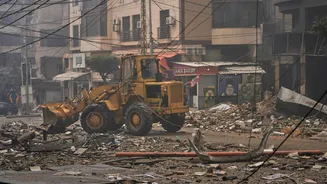
As the conflict continues, the number of casualties in Lebanon has risen to over 900, with significant displacement reported among the population. The humanitarian impact of the war is becoming increasingly dire.
Johnson has publicly disagreed with Kent's assessment of the Iranian threat, asserting that the intelligence community had adequately briefed Congress on the risks posed by Iran's nuclear ambitions.
Reports from Israeli sources provide further details on the Iranian leaders targeted in recent strikes, emphasizing the strategic significance of these operations in the broader conflict.
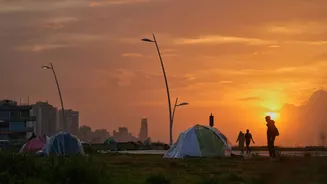
Families displaced by the war are facing a grim Persian New Year, with many seeking refuge in northern Iran from ongoing violence. The economic strain and humanitarian crisis are palpable as citizens grapple with soaring inflation and the aftermath of conflict.
Senator Lindsey Graham has defended the U.S. military's actions in Iran, arguing that the nation has underestimated the threat posed by Iran, asserting that decisive action is necessary.
Iranian state television continues to broadcast warnings against potential protests, indicating the government's intent to suppress dissent as the conflict escalates.
In a significant development, Joe Kent has resigned from his position as Director of the National Counterterrorism Center, citing ethical concerns over the Iran war and asserting that the country did not pose an imminent threat.
Kent's resignation has sparked controversy, with Democrats criticizing his ties to far-right figures and questioning his qualifications for the role.