







XTens of thousands of people, including students, workers and trade union members, took to the streets across Italy on Friday (October 30) during a nationwide
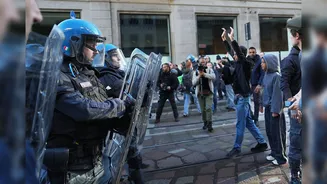
strike, demanding higher wages, better public services and action against the rising cost of living. Demonstrators also protested against increased military spending and the use of Italian ports for arms shipments. The 24-hour general strike was called by grassroots union Unione Sindacale di Base (USB), with demonstrations organised in more than 40 cities across the country. The protests were largely peaceful, although clashes and confrontations with police were reported in several locations. In Rome, a large demonstration marched near the Colosseum, with protesters threatening to set up tents and remain there throughout the weekend. Some demonstrators placed rubbish bins across roads and set them on fire. Later in the evening, a group attempted to march towards parliament, prompting police to deploy water cannons to disperse the crowd, Italian news agency ANSA reported.
A group of masked protesters were seen throwing rocks, glass bottles and firecrackers at officers as clashes erupted outside the Colosseum in Rome.More than 20,000 demonstrators were expected to march across the Italian capital to protest against the rising cost of living. 🔗 https://t.co/kouT9yjn7E
— Sky News (@SkyNews) October 30, 2026
Eight people were detained after repeatedly attempting to breach police barricades, according to ANSA.
Videos circulating from the Italian capital also showed masked demonstrators throwing rocks, glass bottles and firecrackers at police officers as tensions escalated near the Colosseum. More than 20,000 people were expected to participate in demonstrations across Rome.
In Turin, police deployed water cannons against students and left-wing activists who approached security cordons protecting the prefecture building.
In Milan, protesters marched onto the city's ring road before concluding their demonstration outside the Politecnico di Milano university. Some demonstrators carried flares and set objects on fire.
Meanwhile, around 15,000 port workers, students and other protesters entered the port of Genoa. They joined demonstrations against the use of European ports for arms shipments and highlighted the deaths of seafarers in conflicts stretching from the Gulf to the Black Sea.
The nationwide demonstrations followed violent confrontations earlier this month, when protesters clashed with police, looted shops and vandalised property.
Italy's protests are part of a wider wave of demonstrations across Europe, including in France, Spain, Belgium and Albania, driven by concerns over the cost of living, wages and public spending.
The latest unrest highlights growing dissatisfaction among workers and young people over economic pressures and government spending priorities.