









Prime Minister Narendra Modi on Saturday congratulated the people and government of Nepal for the successful conduct of elections, calling it a proud moment
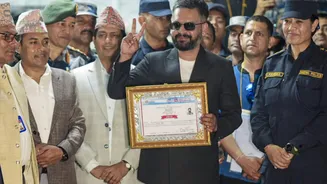
in the country’s democratic journey. PM Modi also said India remains committed to working closely with Nepal and its new government to strengthen cooperation and promote shared peace, progress and prosperity. "I warmly congratulate the people and government of Nepal on the successful and peaceful conduct of elections. It is heartening to see my Nepali sisters and brothers exercise their democratic rights so vibrantly. This historic milestone is a proud moment in Nepal's democratic journey," Modi said in a post on X. Meanwhile, Rapper-turned-politician Balendra Shah defeated four-time prime minister K P Sharma Oli by a wide margin in Nepal’s general elections on Saturday, as his Rastriya Swatantra Party (RSP) moved closer to forming the next government. Shah, popularly known as “Balen,” defeated Oli in the Jhapa-5 constituency, securing 68,348 votes against the former prime minister’s 18,734, according to the Election Commission. The 35-year-old engineer and former mayor of Kathmandu has been projected by the RSP as its prime ministerial candidate. The party, founded in 2022 by Ravi Lamichhane, has emerged as the clear frontrunner in Nepal’s first general elections since the violent Gen Z protests last year that demanded an end to corruption and called for generational change in politics. According to Election Commission data, the RSP had won 62 of the 78 seats declared by Saturday evening and was leading in around 60 other constituencies. The party also swept all 10 constituencies in Kathmandu district and was leading across several other areas. Traditional political parties trailed significantly behind in the results. The Nepali Congress won nine seats and was leading in nine others, while the Communist Party of Nepal (Unified Marxist–Leninist), led by Oli, had won three seats and was leading in nine more. The Nepali Communist Party had won two seats and was leading in five others, while the Shrama Shakti Party was leading in three seats. The Rastriya Prajatantra Party secured one seat and one independent candidate also won. Voter turnout in the March 5 elections for the House of Representatives was around 60%, according to officials. Vote counting began late Thursday night and was continuing in 162 of the 165 constituencies as of Saturday evening. The elections are being closely watched by India, which hopes a stable government in Nepal will help strengthen bilateral development cooperation. Shah had launched his election campaign in Janakpur in Madhesh province and projected himself as the “son of Madhesh.” The RSP is heading toward a strong performance in the province, where it has won seven seats and is leading in 23 others out of the total 32 constituencies.
The party also dominated the Kathmandu Valley, winning all 10 seats in Kathmandu district, two in Bhaktapur and one in Lalitpur, while leading in the remaining constituencies.
Lamichhane, the RSP chairman and a former home minister, won the Chitwan-2 constituency with 54,402 votes, defeating Nepali Congress candidate Mina Kumari Kharel, who received 14,564 votes.
Former prime minister Pushpa Kamal Dahal Prachanda of the Nepali Communist Party won from Rukum Purba district with 10,240 votes.
After Oli’s ouster, Shah was widely seen as a possible interim leader but declined the role, saying he preferred to contest the parliamentary elections for a full term.
He joined the RSP earlier this year and was soon declared the party’s candidate for prime minister.
Under Nepal’s electoral system, 165 lawmakers are elected through direct voting while 110 seats are allocated through a proportional representation system.
About 18.9 million voters were eligible to vote in the elections to choose the 275 members of the House of Representatives, with around 60% turnout reported.
The election follows last year’s Gen Z protests that led to the fall of the coalition government led by Oli, amid demands for anti-corruption measures, better governance and generational change in politics.