








The Indian Navy is preparing for its biggest fleet expansion in a single year — but the significance of the number goes beyond simply adding more hulls
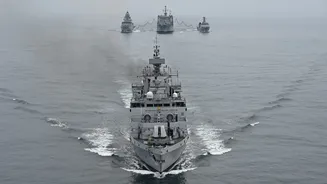
to the force. As many as 18 warships are planned for induction or commissioning in 2026, Defence Minister Rajnath Singh said at the Navy's Commanders' Conference in New Delhi. He described the figure as the largest single-year force accretion in the Navy's history and linked it to the growing maturity of India's domestic naval shipbuilding industry. The expansion comes as India's maritime responsibilities are widening. Indian warships are currently operating in the South China Sea, Mediterranean and Atlantic, signalling a Navy increasingly designed to sustain deployments far beyond India's immediate coastline. Singh said the deployments demonstrated India's blue-water capability and its growing role as a first responder and preferred security partner in the Indian Ocean Region and beyond. But more ships also mean a greater requirement to know what is happening across an increasingly crowded maritime space.
From Indian Ocean to wider seas
The Navy's operational footprint is expanding at a time when India's maritime environment is becoming more complicated. Singh pointed to congestion, deception and grey-zone activities as factors making the maritime domain harder to monitor. He called for a significant upgrade of India's maritime surveillance architecture, arguing that existing monitoring and response mechanisms must keep pace with the growing volume and complexity of maritime traffic.
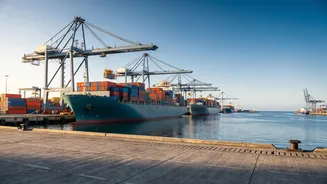
Energy security is another reason the Navy's reach matters. India imports approximately 85–90% of its crude oil and around half of its natural gas through maritime routes, according to the Defence Ministry. That makes shipping lanes and strategic chokepoints directly relevant to the country's economy and energy security.
The Navy's recent role in Operation Urja Suraksha, including efforts to ensure the safe movement of Indian-flagged merchant vessels during the West Asia crisis, was specifically highlighted by Singh.
The shipbuilding engine behind the expansion
The record fleet addition is also being presented as evidence of India's growing ability to build sophisticated warships domestically. Singh said recently commissioned Indian naval warships contain more than 75% indigenous content, adding that the country's naval shipbuilding ecosystem is now meeting global benchmarks. The government's ambition, he said, is moving beyond meeting India's own requirements towards eventually exporting warships to friendly countries.
The pace of construction has already accelerated. The Indian Express reported in July that the Navy had commissioned 18 warships since December 2024 and expected eight more to enter service by the end of 2026.
The latest 18-warship figure therefore represents the planned 2026 induction or commissioning programme, rather than simply a cumulative count of ships entering service during the broader period.
AI, autonomous systems and a different maritime battlefield
The fleet expansion is being accompanied by an effort to change how those ships operate. The Commanders' Conference reviewed the induction of technologies including AI, big-data analysis, autonomous and uncrewed systems and cyber operations, with the Navy emphasising faster technology absorption.
That reflects a broader shift in naval warfare. Having more platforms matters, but so does the ability to connect them through data, detect threats earlier and operate unmanned systems alongside conventional ships and aircraft.
The Navy's April Commanders' Conference had already identified artificial intelligence, data-driven technologies and uncrewed systems as priorities for building a future-ready force.