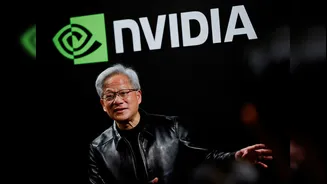








Nvidia's chips are powering the world's most advanced AI models and data centres, so what could Jensen Huang's scandal cost the chipmaker? Computer Chips
The chips used to produce and run artificial intelligence (AI) systems have become a key front in the United States' rivalry with China for geopolitical power and influence. The most powerful chips are needed for the most advanced AI, and the US has tried to maintain its edge over China by restricting access to those chips. Nvidia's AI dominance And US-China Tensions Under Scrutiny Jensen Huang, the CEO and Co-Founder of chipmaking company Nvidia, recently admitted to an extramarital affair. However, the woman involved, Alice Huang, is allegedly a Chinese intelligence agent. While the Chinese government rejects claims of espionage, Alice Huang has reportedly been under investigation by the US for years. So what's so special about Nvidia? What's in it for China? And if Jensen Huang goes down, what else could go down with him? Nvidia is the world's biggest supplier of the high-end chips used for AI and data centres, with some estimates putting its market share over 80 percent. The now multi-trillion-dollar company got its start making chips called graphic processing units (GPUs), used largely for video games. However, these chips and their successors turned out to be ideal for the kind of number-crunching needed for training and using AI models. As a consequence, Nvidia has played a key role in the US government's strategy to stall China's development of AI. Sales of Nvidia's most powerful chips to China have been restricted since 2022 – though the restrictions were somewhat relaxed last year. However as per reports Chinese enterprises have repeatedly tested the boundaries of US sanctions. Southeast Asian companies including Megaspeed, Alice Huang's former employer have been accused of buying Nvidia chips and exporting them into China. Trade records indicate over 3 billion dollars in chips crossed from Singapore to China in a single year, alongside similar volumes from Malaysia. Funding Ambitions And Valuation Concerns OpenAI has indicated that it will not pursue a stock market listing in 2026, with CEO Sam Altman citing AI safety concerns. Meanwhile, Anthropic could face a speculative-grade credit rating after its IPO, according to a Financial Times report citing Blackstone's assessment. Such a rating could make borrowing more expensive for the AI company. Data centre firms too are losing value as they face community pushback and soaring energy costs. Nvidia Faces Leadership, Regulatory & Reputational Scrutiny Nvidia faces growing scrutiny amid concerns over AI and data-centre expansion in the US, reported regulatory investigations and a board review involving CEO Jensen Huang. The development has also renewed attention on the company's reliance on Huang's leadership and public image, which have been closely linked to Nvidia's rise over the decades. (With Inputs From The Conversation, PTI)