







New Delhi: After leading one of the country's biggest student-led protests in recent years, the Cockroach Janta Party (CJP) is set to hold what could be
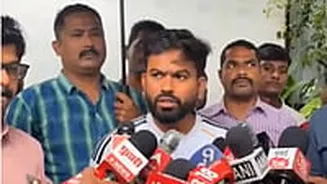
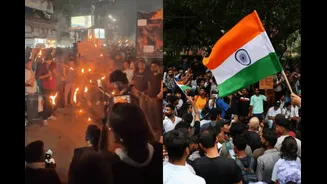
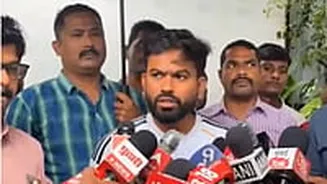
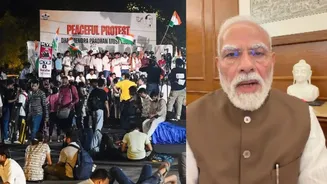
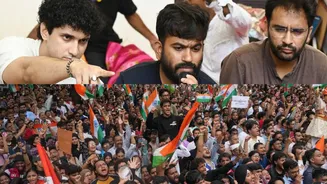
its most crucial meeting yet on Wednesday (August 5), with the organisation expected to decide its future roadmap amid growing national attention. The outfit will hold its first core committee meeting in Chhatrapati Sambhaji Nagar, where members from across the country have been invited to discuss organisational expansion, future campaigns and the issues the movement plans to take up in the coming months. The meeting comes less than two weeks after CJP emerged at the centre of the nationwide agitation over the alleged NEET paper leak and other exam irregularities. The 36-day protest at Delhi's Jantar Mantar culminated in the resignation of Union Education Minister Dharmendra Pradhan on July 25, giving the organisation unprecedented visibility. Ahead of the meeting, CJP founder Abhijeet Dipke said the gathering would focus on defining the organisation's priorities rather than changing its character. “This meeting has been called to decide our agenda. We will discuss how to expand the organisation, identify the issues we should take up in the interest of the people, and chart the roadmap for the outfit,” Dipke said on Monday.
Political Party or People's Movement?
One of the biggest questions surrounding Wednesday's meeting is whether CJP will eventually enter electoral politics.
Speculation has intensified after the organisation's rapid rise during the student protests. However, Dipke dismissed reports suggesting the outfit could transform into a political party.
“We have no intention of turning the organisation into a political outfit. We want it to continue as a people’s movement.”
Explaining his position further, Dipke questioned the credibility of the current political system.
“Given the current circumstances, I see no reason to convert CJP into a political party,” adding, “When votes are being deleted, people are losing faith in the electoral process, when they vote for someone in the morning and by the evening someone else gets elected, when they elect MLAs and MPs from one party and they switch their allegiance to another political party, and political parties are split with the help of the ED (Enforcement Directorate) and the CBI (Central Bureau of Investigation), forming a political party is not the solution.”
Dipke Responds to Financial Transparency Demand
Dipke also responded to a demand by a Surat-based Right to Information (RTI) activist seeking an inquiry into his family's finances.
The CJP founder said he was willing to make public documents relating to his educational loan, scholarship and academic qualifications while challenging Prime Minister Narendra Modi to disclose his educational degree.
“If Prime Minister Modi ji is willing to make his educational degree public, I am also ready to make public all my documents related to my educational loan and scholarship. I have my original degree, and I hope the Prime Minister’s degree is genuine as well. Let him make his documents public, and I will do the same,” he said.
Five Big Questions Before CJP's Biggest Meeting Yet
1. Will CJP Enter Electoral Politics?Despite Dipke's assertion that CJP will remain a people's movement, Wednesday's meeting is expected to clarify whether the organisation completely rules out contesting elections in the future or leaves the option open.
2. What Will Be CJP's Next Big Campaign?
After making education reforms and examination transparency its central issue, the organisation must decide which public concerns it will take up next and whether it can build a broader national agenda.
3. How Will It Expand Across India?
With supporters now spread across several states, the core committee is expected to discuss expanding its volunteer network, leadership structure and grassroots presence while maintaining organisational discipline.
4. How Will CJP Preserve Its Independence?
As the movement grows, it is likely to face attempts by political parties and interest groups to influence its direction. The meeting may discuss mechanisms to preserve CJP's identity as an independent citizens' movement.
5. Can It Sustain Momentum After Its Biggest Victory?
The resignation of the Union education minister marked CJP's biggest political success so far. The challenge now is whether it can sustain public support, mobilise volunteers and remain relevant beyond a single issue-driven campaign.
The decisions taken at Wednesday's meeting are expected to shape the next phase of CJP's journey. While Dipke has ruled out an immediate political plunge, the organisation's roadmap, expansion plans and future campaigns will be closely watched to see whether it can evolve from a protest movement into a lasting national force.