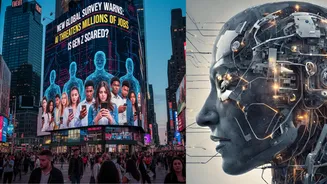








Young employees, particularly those from Generation Z, are the most anxious about how artificial intelligence will affect their jobs, even as AI adoption
accelerates across workplaces, according to a new global survey by recruitment firm Randstad. The study found that four out of five workers believe AI will influence their day-to-day tasks, with concerns rising as companies increasingly deploy AI chatbots, automation tools and digital agents. Job postings requiring so-called “AI agent” skills have jumped 1,587%, highlighting how quickly demand is shifting toward AI-driven roles. Randstad’s annual Workmonitor report is based on responses from 27,000 workers and 1,225 employers, along with analysis of over 3 million job postings across 35 countries. The data suggests AI and automation are already displacing low-complexity, transactional roles, intensifying job insecurity among younger workers. The findings come at a time of heightened strain in global labour markets. Companies worldwide are cutting jobs as consumer confidence weakens, amid economic uncertainty triggered by US President Donald Trump’s trade war and an increasingly confrontational foreign policy stance. At the same time, AI-focused technology firms are moving ahead with automation-driven restructuring, even as many businesses are still waiting to see concrete returns from massive investments in artificial intelligence. Randstad CEO Sander van ’t Noordende said employees generally see the potential of AI but remain cautious about how companies will use it. “Workers are enthusiastic about AI, but they are also sceptical, because companies ultimately want to cut costs and improve efficiency,” he told Reuters. The survey highlights a sharp generational divide. Gen Z emerged as the most concerned group, while Baby Boomers were the least worried, expressing greater confidence in their ability to adapt to technological change. By the numbers, nearly half of workers fear AI will benefit corporations more than employees. There is also a significant gap between employer and worker sentiment: while 95% of employers expect business growth this year, only 51% of employees share that optimism. The report underscores how rapidly advancing AI is reshaping workplace expectations—and why younger workers, entering the job market amid automation and economic uncertainty, feel especially vulnerable.