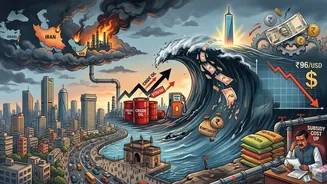








India’s economy is coming under pressure as the ongoing Iran war pushes up oil prices, making imports more expensive and weakening the rupee. India depends
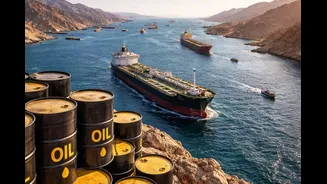
heavily on imported oil, and as prices rise, the country has to spend more dollars to buy crude. This is increasing the current account deficit - simply put, more money is going out of India than coming in. The Reserve Bank of India (RBI) stepped in last week with strong measures to control the fall of the rupee and reduce speculation in the currency market. While the move briefly helped the rupee recover, the relief did not last long, and the currency soon slipped back to record lows. Experts say the main problem is not just market speculation, but the real demand for dollars in the economy. Also Read: Strait Of Hormuz To Remain Closed? Trump May End Iran War Without Reopening Key Waterway “The problem is the pressure on the rupee is not just from speculators it comes from the real demand for dollars in the economy,” Abbas Keshvani, Asia Macro Strategy Director at RBC Capital Markets, said Monday in an interview on Bloomberg TV. “Even before all of this kicked off in the Middle East, India had a very wide trade deficit and that deficit is going to widen.” Another concern is that money sent home by Indians working in Gulf countries may fall due to the conflict. Nearly 10 million Indians work in the region, and lower remittances would reduce foreign money coming into India, the Bloomberg report added. Earlier, India’s current account deficit was expected to be around 1% of GDP for the financial year ending March. Now, it could rise to 2.5% next year, according to Standard Chartered Plc. Economists at Nomura Holdings Inc. say that for every 10% increase in oil prices, the deficit could widen by about 0.4% of GDP. The rupee, already Asia’s worst-performing currency this year, briefly jumped 1.4% after RBI’s action but later fell again to a record low of 94.8325 per dollar. According to Bloomberg Economics economist Abhishek Gupta, if the conflict worsens and the Strait of Hormuz remains blocked, oil prices could average $125 per barrel by the next financial year. This could lead to a massive balance of payments deficit - meaning a big gap between money coming into and going out of the country - of over $130 billion. Before the war, India was expected to have a small surplus of $10 billion. For comparison, the country had a surplus of $63.7 billion in FY2024 and a deficit of $5 billion in FY2025, according to RBI data. “India’s balance of payment will be in deficit for the second successive year in this financial year — which has never happened before,” said Anubhuti Sahay, India economist at Standard Chartered Plc. “Risk of a third year of balance of payment deficit has increased,” in the next financial year beginning April, adding to pressure on the rupee. There are also worries that foreign investors may pull money out of India and move it to safer countries during this uncertain period. “This has never happened since 1991,” said Soumya Kanti Ghosh, group chief economic advisor at State Bank of India. Rising oil prices are also expected to slow India’s economic growth. Economists at Goldman Sachs Group, led by Santanu Sengupta, have cut India’s growth forecast for 2026 to 5.9%. In simple terms, expensive oil is hurting India on multiple fronts - weakening the rupee, increasing the country’s expenses, and slowing down overall economic growth.