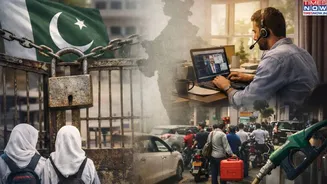








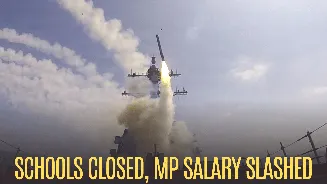
Pakistan's Punjab government has directed the closure of all public and private schools, colleges, and universities till March 31. A work-from-home policy
has also been rolled out in government offices in a bid to save fuel amid the ongoing West Asia conflict. While educational institutions have been shut in Punjab state, the WFH policy, along with a four-day working week, was announced by Prime Minister Shehbaz Sharif on March 9, considering the nation's dependency on oil supplies from the Gulf, whose prices have skyrocketed over the past few days. "All public and private schools, colleges, and universities will remain closed from March 10 to March 31, while examinations will be conducted as per the existing schedule. Educational institutions will be allowed to conduct online classes during this period," Punjab Chief Minister Maryam Nawaz announced on Monday. Addressing the nation on the state-run PTV and other private channels, PM Sharif said, "The government has decided that 50 per cent of employees in the public and private sectors will work from home to save fuel." "Further, they will work for only four days a week," he added. However, banks and key industries will be exempted from these restrictions. All official outdoor events have also been banned. The chief minister has further urged the public not to engage in unnecessary buying or hoarding of essential commodities, as panic has set in with people buying petrol and other petroleum products for reserves. According to Sharif, the government has decided to reduce fuel allotment by 50 per cent for government vehicles for the next two months, while 60 per cent of such vehicles will stop operating during this period.
Will India Too Face School Closures & WFH Mandates?
Fuel shortages and stock concerns have coerced school closures and WFH mandates across Pakistan. As of now, India is not facing such scarcity. Clearing the air around speculation about fuel deficiency, Petroleum and Natural Gas Minister Hardeep Singh Puri recently stated that there is no shortage of energy in India and there is no cause for worry for energy consumers.
In conversation with a media outlet, Mr Puri said, "The government's priority is to ensure the availability of affordable and sustainable fuel for citizens, and it is doing so comfortably."
Therefore, it is unlikely for Indian schools or offices to face such shutdowns as of now.
Recommended | Bangladesh Shuts Universities Early to Tackle Power Crisis