





What is the story about?

Buying an EV is often easier than living with one for the first few weeks. Ask any new owner about their first highway charging stop and you'll hear a familiar
story. The charger was working, the car was connected properly, yet charging seemed to slow down dramatically when the battery still wasn't full. Many people walk away thinking the charging station has a problem. In reality, this is one of the most misunderstood parts of EV ownership. Knowing why it happens can save time, reduce frustration and help drivers plan trips more efficiently especially as electric cars become more common on Indian roads.
Why The Last 20% Feels Like It Takes Forever
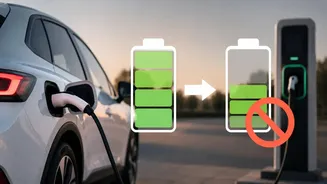
The fastest part of an EV charging session usually happens at the beginning, not the end. When a battery is running low, it can accept power quickly. As the charge level rises, the car gradually starts reducing the amount of power flowing into the battery. This is done to manage heat and protect the battery over the long term.The result is something many first-time owners don't expect. Going from 20 to 70% can feel relatively quick while the final stretch from 80 to 100% can seem surprisingly slow. Nothing is malfunctioning. The vehicle is simply managing its battery the way it was designed to.

The Mistake That Adds Unnecessary Waiting Time
A lot of drivers treat EV charging like filling a fuel tank. The instinct is to keep charging until the battery reaches 100% before moving on. That's where the extra waiting begins. Keeping the battery charge between 20% and 80%, which is also the standard rule to extend battery life is perfectly adequate. It also requires far less power than you might think. On a long journey, waiting for a completely full battery may add time without delivering a meaningful advantage.Drivers who regularly travel in EVs often stop charging once they have enough range to comfortably reach the next charging point. It turns out that several shorter charging stops can sometimes be more efficient than one very long one.

A Simple Change That Makes EV Ownership Easier
The easiest way to avoid charging frustration is to stop thinking about charging in the same way as refuelling. It is important to focus on the range needed for the next part of the journey. This approach not only reduces waiting times but also makes long-distance travel easier to plan.The most common EV charging problem isn't usually a broken charger or a faulty battery. More often, it's a misunderstanding of how modern batteries behave. Once drivers understand that, charging delays become far less frustrating and much easier to manage.