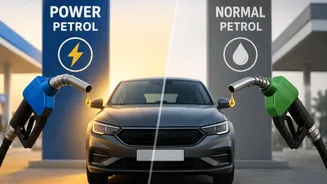










Walk into any fuel station today and you will often hear the same line -“Go for power petrol.” It sounds like the better option, and many people assume
it is good for every car. But the truth is that not every vehicle needs power petrol, and using it blindly can just increase your fuel bill. What Is Power Petrol Power petrol, also known as premium or high-octane fuel, has a higher octane rating compared to normal petrol. In India, normal petrol usually comes with an octane rating of around 87-91, while power petrol goes up to 91-95 or more, which means octane rating tells how well the fuel can handle pressure inside the engine without burning too early. Why Some Cars Benefit From It Power petrol is mainly useful for modern engines like turbocharged or high-performance cars. These engines operate under higher pressure. Because of the higher octane, power petrol burns in a more controlled way. This leads to smoother driving, better acceleration, and sometimes a small improvement in mileage, usually around 5–10 percent. It also reduces engine knocking, which is when fuel burns too early and can damage engine parts. Also Read: Tata Harrier Petrol Fearless Ultra Explained - What Is Offered In Top Variant Cleaner Engine And Better Health Another advantage of power petrol is the additives it contains. These are special cleaning agents that help keep the engine parts, like fuel injectors and valves, free from carbon deposits. Over time, this can help the engine run smoother and may reduce maintenance issues. For people who drive long distances or use their cars heavily, this can be useful. Why It Is Not Always Needed Here is the part many people do not understand. If you own a regular car with a standard engine, it is already designed to run on normal petrol. Using power petrol in such cars will not give you extra power or better mileage in any noticeable way. Instead, you will just spend Rs 5-Rs 10 more per litre without real benefits. When Should You Actually Choose Power Petrol Power petrol makes sense only in certain situations. You should consider it if your car has a turbo engine, or if the manufacturer clearly recommends high-octane fuel. It is also useful when driving in extreme conditions like long highway runs, steep hills, or very hot weather, where engines are under more stress. If your goal is to keep your engine clean, you do not always need to switch to premium fuel. There are fuel additives available that can help clean the engine and improve performance at a lower cost. The idea that power petrol is always better is simply a myth. The best fuel depends on your car’s engine design.