







What is the story about?

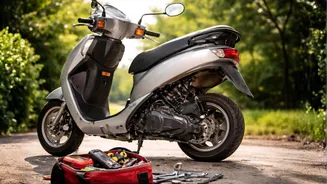
I woke up one day to find that my petrol scooter would not start, and the reason for this was a basic problem that is quite common in the usage of scooters
in India. This is important because it has been found that in most cases of no-start problems in scooters, the reason is not a serious one but something as basic as battery drain or safety switches. Since there is a high level of dependence on scooters for daily commuting, a problem such as starting failure can cause unnecessary workshop visits. These 5 checks will help in practical troubleshooting that owners can use immediately to avoid redundant repair costs. Also Read: Bike Battery Draining Fast? Hidden Causes And Quick Fixes
1. Check Battery Charge And Starter Response
- The weak starter sound is the first symptom that I noticed. It showed that the battery was not charged.- Petrol scooters are known to drain batteries because of the stop-and-start traffic in India.
- The headlight and horn output were checked, which are common signs of a battery.
- A weak or slow starter is not a problem with the engine but a sign of low voltage or loose terminals.
- The terminals can be cleaned, and the battery can be charged to overcome this issue.
- Batteries drain after two to three years of exposure to the Indian sun.
2. Confirm Fuel Level And Delivery
- Scooters can show fuel on the gauge but still fail to start if fuel sloshes away from the pump on inclines or during low level.- I ensured sufficient petrol and cycled the ignition to prime the fuel pump.
- Modern scooter variants use fuel injection, so pump priming sound confirms fuel delivery readiness. Absence of this sound may indicate pump or relay issues.
- Adding fuel and allowing priming often resolves dry-line starting failures.
- This check matters because many no-start incidents in India occur simply from low fuel combined with parking angles or delayed refuelling habits.

3. Verify Side-Stand And Brake Interlocks
- Many scooters include safety interlocks that prevent starting if conditions are not met.- I confirmed the side stand was fully retracted and applied the brake lever while pressing the starter, both required for ignition logic.
- Dust or stiffness can prevent switches from engaging correctly. Many riders overlook this because the engine appears otherwise normal.
- Slightly moving the stand or lever restored switch contact in my case.
- Interlock misalignment is common in scooters used on rough roads where stands or levers face repeated impacts.
- This step eliminates a frequent but easily missed electronic lockout cause.
4. Inspect Spark And Ignition Indicators
- Ignition is a suspect here if the starter motor turns but the engine is not firing.- To make sure that the key system or engine cut-off was functioning, I checked for warning lights.
- The combustion can get interrupted due to factors like moisture, loose ignition connectors or worn spark plugs.
- In Indian monsoon or wash conditions, ignition components may accumulate moisture.
- Drying connectors and confirming spark plug condition resolved intermittent firing issues.
- Spark plugs in commuter scooters typically require inspection or replacement at service intervals. This step separates fuel or battery problems from ignition faults before seeking professional repair.
Also Read: My Bike Didn’t Start In The Morning — What I Tried And What Actually Worked

5. Reset And Retry After Cooling
- After repeated start attempts, engines can flood or systems can temporarily lock.- I switched off ignition, waited briefly, then retried with throttle closed, allowing sensors to reset.
- Heat soak after short runs in traffic can also affect starting consistency.
- Cooling briefly restores normal operation in many cases. This final step confirmed that no persistent mechanical fault existed.
If failure continues after these checks, workshop diagnosis becomes necessary. In most no-start cases in scooters like Honda Activa 125, TVS Jupiter 125 and Suzuki Access 125, however, one of the earlier steps resolves the issue, restoring normal operation without parts replacement.