






If you are new to electric vehicles, the first thing you will wonder is ‘how do you charge it, and what will it cost?’ The good news is that EV charging
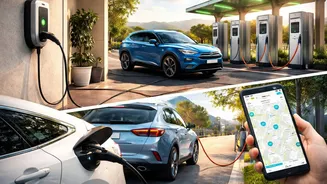
in India is not only simple but also far cheaper than running a petrol or diesel car. Once you understand the basics, it starts to feel as easy as charging your phone. How EV Charging Works At its core, charging an EV is straightforward - plug it in, wait, and you’re ready to go. Most owners follow a “home-first” routine, charging their cars overnight. Using a standard AC charger (3.3 kW or 7.2 kW), a full charge typically takes 6 to 12 hours. Even a regular 15A home socket can be used, which makes daily charging extremely convenient. For most people, this becomes part of their routine — just like charging a smartphone before going to bed. Fast Charging While home charging works for daily use, fast charging is designed for situations when you’re short on time. DC fast chargers, commonly found on highways, malls, and public locations, can charge a car from 20% to 80% in about 30 to 60 minutes. This makes them ideal for long drives or quick top-ups during travel. Where Can You Charge In India? India’s EV charging network is expanding rapidly as charging is no longer limited to a few select areas.
- Home Charging is the most convenient and cheapest option, usually installed by the car manufacturer
- Public Stations which are available in malls, offices, restaurants, and parking areas
- Highways- Increasing number of fast chargers for intercity travel
Also Read: Bharat NCAP Explained - How Safety Ratings Work And Why Is This Important For Your Car
Cost Of Charging
This is where EVs truly stand out as charging at home typically costs Rs 180 to Rs 500 for a full charge, translating to roughly Rs 1 to RS 1.5 per kilometre. Public charging costs more, with AC charging at Rs 10 - Rs 15 per unit and DC fast charging at Rs 18 - Rs 25 per unit. Even then, EVs remain significantly cheaper to run compared to petrol cars.
Monthly Savings
For someone driving around 1,000 km per month, the difference is clear as EV running costs around Rs1,500 - Rs 3,000, while petrol cars cost around Rs 6,000 - Rs 10,000, that is a saving of nearly 60-70%, which adds up quickly over time.
Things You Should Know Before Switching
There are a few practical aspects to keep in mind. Most EVs in India use the CCS2 charging standard, ensuring compatibility across networks. Home charger installation is usually handled by the dealer and may be subsidised. Charging during off-peak hours, like late at night, can further reduce electricity costs. And importantly, most owners rely on home charging, using public chargers only when necessary.
EV charging may seem unfamiliar at first, but it quickly becomes second nature. You skip fuel queues, charge at home, and spend far less on running costs. In a country where fuel prices keep rising, EVs are not just about sustainability, but they are about smarter, more economical driving.