





What is the story about?

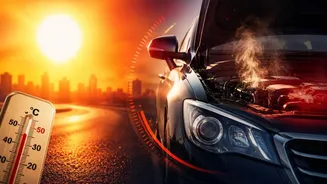
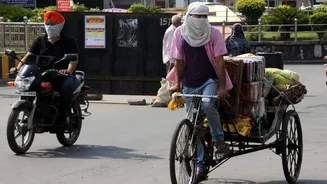
North India hit 47°C this May. In those conditions, an engine overheating in city traffic is not bad luck — it is a predictable outcome of a cooling system
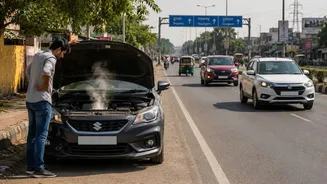
that was already under strain. The temperature gauge going into the red is not something you push through. Five minutes of driving an overheating engine can blow the head gasket. That repair starts at Rs 30,000 and can cross Rs 1 lakh depending on the car. What you do in the first few minutes after that gauge spikes determines whether you drive home or call a tow truck.
What Is Actually Causing The Engine To Overheat
Before you can fix it, you need to know what went wrong. In Indian summer conditions, it is almost always one of these:- Low or old coolant: the most common cause by a distance. Coolant that has not been replaced in over two years stops absorbing heat the way it should. Low levels mean the system does not have enough fluid to carry heat away from the engine in the first place.
- Blocked radiator: dust, insects and road debris build up in the radiator fins over months. In slow traffic where there is no forward movement pushing air through, a dirty radiator simply cannot cool.
- Cooling fan not working: when the car is not moving, the fan is the only thing pulling air through the radiator. If it has failed, the engine has no cooling at idle or in a traffic jam.
- Stuck thermostat: if it locks in the closed position, coolant cannot reach the radiator at all. The engine cooks itself.
- Weak water pump: at low RPMs in city traffic, a worn pump circulates coolant too slowly. Heat builds faster than it can be removed.
- Old engine oil: oil past its service interval loses its ability to reduce friction. Extra friction means extra heat, and the cooling system has to work harder to compensate.

Exactly What To Do When The Gauge Goes Red
Do these in this order. Getting the sequence wrong makes things worse:- Keep the AC on but switch it to maximum heat: yes, this sounds backwards. But the heater matrix inside the cabin works like a second radiator. It pulls heat out of the coolant and dumps it into the cabin air. With the windows down, this genuinely reduces engine temperature and buys you time to find a safe spot to stop.
- Pull over: do not keep driving hoping the gauge drops. Every extra minute of running an overheated engine risks the head gasket and the cylinder head.
- Switch the engine off completely: not to idle, off.
- Open the bonnet: stand to the side when you do it, not directly in front. Trapped heat needs somewhere to go.
- Leave the radiator cap alone: coolant sits above 100 degrees under pressure when the engine is hot. Opening the cap at this point sends scalding liquid straight at you. Wait at least 30 minutes before touching it.
- Check the coolant reservoir from the outside: most cars have a translucent plastic reservoir with MIN and MAX lines on it. You can see whether it is empty without opening anything.
- Top up only once the engine is cold: use the correct coolant mixed with distilled water. Tap water has minerals that scale up the radiator over time and make the problem worse.
- Do not restart and drive if the gauge is still reading high: if the temperature has not come down after 30 minutes, call for assistance. The engine is not ready and driving it further risks destroying it completely.