








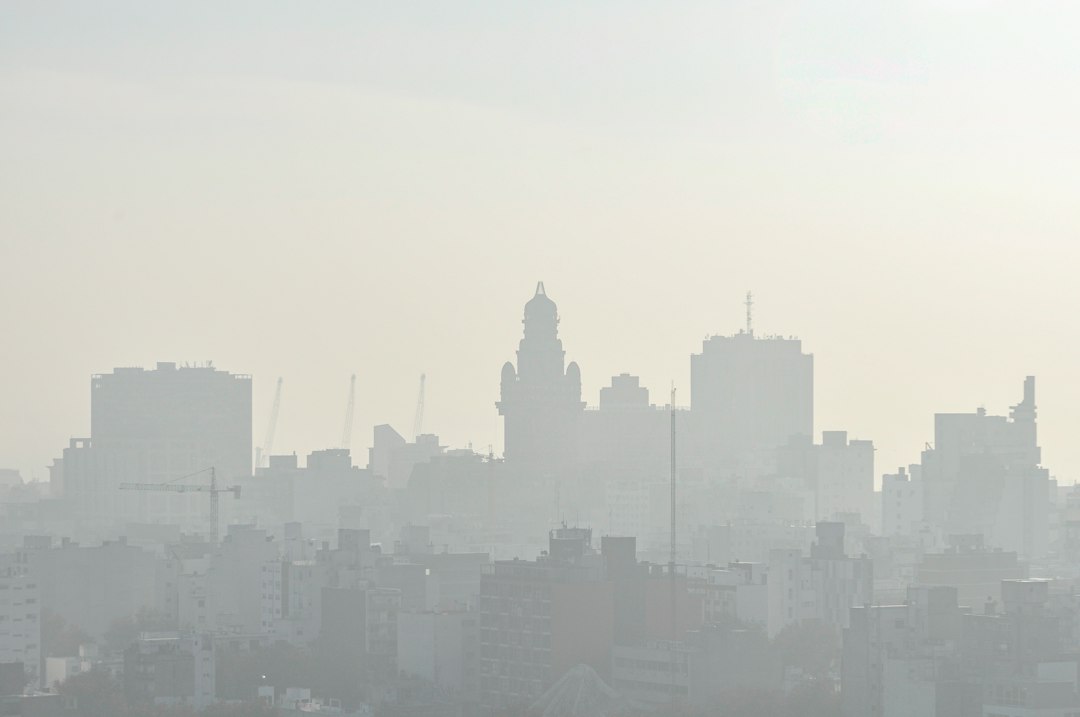

Amid allegations of air quality index tampering by the Aam Aadmi Party against the Delhi government, the third stage of emergency curbs under the Graded Response Action Plan have come into effect in the national
capital.
Pollution levels have crossed 400 AQI (severe) in Delhi, but the measures taken are only as sound as the metrics informing them.
The Central Pollution Control Board (CPCB), empowered under the Air (Prevention and Control of Pollution) Act, 1981, enforces rigorous statutory protocols to govern the number, location, and physical surroundings of air monitors to prevent skewed or biased measurements. To build an accurate municipal profile, it establishes network baselines determined by population tiers, incorporating both manual stations (which gather 24-hour samples twice weekly) and Continuous Ambient Air Quality Monitoring Stations (CAAQMs), which feed live readings into the daily AQI.
Under criteria formulated in 2019 using 2011 Census statistics, the required number of units scales progressively.
Here’s how:
- 1,00,000 to 5,00,000 residents: At least four stations, including a minimum of one continuous unit.
- 5,00,000 to 10,00,000 residents: At least six stations, with at least three continuous units.
- 10,00,000 to 50,00,000 residents: At least eight stations, including five continuous monitors.
- Over 50,00,000 residents: A minimum of 16 stations, comprising at least 12 continuous units.
In major metropolitan centres requiring 12 continuous stations, CPCB guidelines stipulate a balanced zonal categorisation.
Here’s how:
- Four stations in residential neighbourhoods
- Three in commercial districts
- Two in industrial zones
- Three along high-density traffic corridors
- Two manual stations must serve as “background stations” positioned upwind and downwind of the city to gauge incoming and outgoing pollution.
Because India’s actual populations have expanded significantly since the 2011 Census, regional authorities have introduced geographic density rules. The Commission for Air Quality Management (CAQM) mandated that “one monitoring station is envisaged per 25 sq km” across Delhi and adjoining cities (Ghaziabad, Noida, Greater Noida, Gurugram, Faridabad, and Sonipat), dividing the region into a structured 5-km by 5-km grid, with other National Capital Region (NCR) districts assigned one station per 50 sq km.
Delhi’s continuous monitoring network has consequently expanded from 18 units in 2017 to 38 in 2021, and to 59 active stations, operated by the Delhi Pollution Control Committee (DPCC), CPCB, the India Meteorological Department (IMD), and the Indian Institute of Tropical Meteorology (IITM).
To guarantee that measurements are truly representative of broader ambient air rather than isolated micro-climates, CPCB regulations mandate strict physical placement parameters.
Here’s how:
- Inlet height (3 to 10 m): The air intake sampler must be positioned between 3 and 10 m above ground level to avoid direct suction of ground-zero vehicular exhaust, though dedicated roadside stations place inlets at 3 m to reflect pavement-level pedestrian exposure.
- Buffer from trees (over 20 m): Monitors must remain more than 20 m clear of trees, as foliage naturally absorbs gases and provides settling surfaces for particulates, which can artificially depress readings.
- Buffer from unpaved roads (at least 200 m): Stations must be set back at least 200 m from unpaved surfaces so that localised dust clouds do not induce false pollution spikes.
- Building clearance (twice the building’s height): A sampler must maintain a clearance distance equal to at least twice the height of any adjacent wall or structure rising above the inlet to prevent structural obstruction of airflow.
- Unrestricted quadrant airflow: The monitoring device must have free, unobstructed airflow across at least three of its four quadrants, strictly prohibiting installation in corners, enclosed balconies, or confined alcoves.
- Buffer from combustion sources (at least 25 m): Equipment must sit at least 25 m away from domestic chimneys, furnaces, or diesel generator exhaust vents.
- Traffic density setbacks: For monitors tracking gases like ozone and nitrogen oxides, setbacks scale with traffic volume – from 10 m for roads carrying up to 10,000 vehicles daily, to 250 m for major highways carrying 1,10,000 or more vehicles.
HOW ARE DAILY AQI CALCULATIONS VALIDATED?
A monitoring station’s automated readings do not automatically feed into a city’s published daily index.
Under CPCB protocols, valid AQI computation requires data from at least three distinct pollutants, one of which must be particulate matter (PM2.5 or PM10). Further, each monitored pollutant must log a minimum of 16 hours of valid data within a 24-hour cycle. Because of these criteria, the number of stations contributing to a city’s daily AQI fluctuates.