
New Zealand Foreign Minister Winston Peters has sharply criticised the recently concluded India–New Zealand Free Trade Agreement, describing it as “neither free nor fair.” He further warned that the FTA
represents a “bad deal for New Zealand”, conceding too much while offering limited benefits in return.
In a post on X, Peters said New Zealand First was “regrettably opposed” to the agreement, arguing it makes “serious concessions” on immigration and investment without securing meaningful benefits for key export sectors, particularly dairy. “This is not a good deal for New Zealand farmers and is impossible to defend to our rural communities,” he said.
“We consider the India-New Zealand Free Trade Agreement to be neither free nor fair. Regrettably, this is a bad deal for New Zealand. It gives too much away, especially on immigration, and does not get enough in return for New Zealanders, including on dairy,” Peters, leader of New Zealand First, a nationalist political party and a key partner in the country’s ruling coalition, tweeted.
His comments come as both governments hailed the deal as a breakthrough that could double bilateral trade within five years. New Zealand says the FTA will eliminate or reduce tariffs on 95% of its exports to India, with more than half becoming duty-free immediately, while all Indian goods gain duty-free access to New Zealand. Wellington has also committed around $20 billion in investment into India over 15 years.
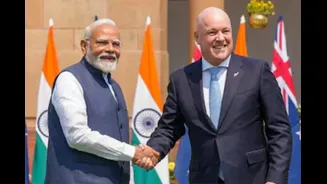
Prime Minister Christopher Luxon said, “The gains are wide-ranging and significant,” while Indian Prime Minister Narendra Modi called the agreement a “historic milestone” that it “sets the stage for doubling bilateral trade in the coming five years.”
Peters, however, criticised the speed of negotiations and the exclusion of core dairy products, noting it is New Zealand’s first trade deal to omit milk, cheese and butter. He also objected to immigration provisions, calling them “deeply unwise” given domestic labour market pressures.
Despite opposing the FTA, Peters stressed his party remains “deeply committed to the advancement of the India–New Zealand relationship” and said its stance reflects differences within New Zealand’s coalition government, not a critique of India or its leadership.