




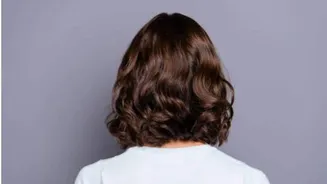
As much as I’m a sucker for dreamy rain-soaked evenings, endless cups of chai and that unmistakable petrichor, a tiny voice in my head starts screaming the moment the clouds roll in—”Oh no, not the monsoon
monster again!”
Because my otherwise shiny, happy locks suddenly decide to transform into what can only be described as a full-blown chidiya ka ghosla. And if you have wavy or curly hair, I’m pretty sure you know exactly what I’m talking about.
Every monsoon, I convince myself that this shampoo will work. That hair mask will finally tame the frizz. Maybe this viral DIY hack is the answer. But somehow, every year ends the same way—with lifeless strands, impossible tangles and hair so stubborn that brushing it feels like torture for my scalp, my patience and my otherwise chirpy mood.
The frizz. The straw-like texture. The endless flyaways. It’s enough to make you want to tie your hair into a bun and pretend it doesn’t exist.
If this sounds like your rainy-season reality too, welcome aboard because after years of trial, error and countless bad hair days, I think I’ve finally found the magic recipe.
Why Does Hair Become Frizzy During Monsoon?
Now, before we jump into the routine, let’s first understand what’s causing all the chaos. Blame it on all that extra moisture in the air. Your hair naturally absorbs it, causing the outermost layer, known as the cuticle, to lift. Once that happens, the strands begin to swell, leading to frizz, flyaways and that rough, straw-like texture we all dread.
Throw in sweat, pollution, unexpected rain showers and the occasional skipped wash day, and you’ve got the perfect recipe for a bad hair day. Your scalp starts producing more oil while the lengths remain dry and dehydrated. The result? Hair that’s greasy at the roots, rough at the ends and simply refuses to cooperate, no matter how much you brush, style or pray for a miracle.
However, the good news is that you don’t need an elaborate 10-step routine to fight it. A few smart swaps can make a world of difference.
The Holy Hair Ritual (With A Few Monsoon Twists)
Let’s get one thing straight, we’re not asking you to throw away your entire haircare routine.
One of the biggest monsoon myths is that washing your hair less often will reduce frizz. In reality, sweat, excess oil and pollution build up much faster during this season, making your hair look limp and lifeless. Washing your hair according to your scalp type is actually the healthier choice.
If you’re looking for budget-friendly options that don’t compromise on performance, L’Oréal Paris Hyaluron Moisture 72H Shampoo, BBlunt Intense Moisture Shampoo and Love Beauty & Planet Argan Oil & Lavender Shampoo are all excellent picks. They cleanse away dirt, sweat and product build-up while keeping your hair hydrated. If your hair is colour-treated, chemically processed or simply craving some extra TLC, investing in premium formulas like Kérastase Genesis Bain Hydra-Fortifiant Shampoo or Olaplex No.4 Bond Maintenance Shampoo can make a noticeable difference.
Conditioning, however, is one step you simply cannot skip.
A good conditioner helps smooth the lifted cuticle, lock in moisture and make detangling far less painful. For everyday use, L’Oréal Paris Hyaluron Moisture Conditioner and Dove Intense Repair Conditioner work beautifully. If you’re happy to splurge a little, Moroccanoil Hydrating Conditioner, Olaplex No.5 Bond Maintenance Conditioner and Kérastase Genesis Fondant Renforçateur Conditioner leave hair softer, shinier and much easier to manage.
But if there’s one product we would genuinely recommend adding to your monsoon routine, it’s a nourishing hair mask.
Personally, switching from using only a conditioner to applying a hair mask twice a week has been the biggest game-changer for my hair. It didn’t magically erase the frizz overnight, but it definitely made my hair feel softer, smoother and much easier to style. If you’re looking for affordable options, L’Oréal Paris Total Repair 5 Hair Mask, Dove 10-in-1 Deep Repair Treatment Hair Mask, Pilgrim Argan Oil Hair Mask and Plum Avocado Nourish-Up Hair Mask are all fantastic choices. If you’re after salon-like results at home, Moroccanoil Intense Hydrating Mask, Olaplex No.8 Bond Intense Moisture Mask and Kérastase Masquintense Hair Mask are worth every penny.
The Tried-And-Tested Tricks
Sometimes, the oldest tricks really are the best.
A good pre-wash oil massage can go a long way in reducing dryness and improving manageability. If you love rosemary oil, always dilute a few drops with a carrier oil such as coconut, jojoba or sweet almond oil before applying it to your scalp. Leave it on for about 20 to 30 minutes before washing.
If rosemary oil isn’t your thing, plain coconut oil is still a classic for a reason. I like adding the contents of one Vitamin E capsule to it before applying it to my hair lengths.
Another little trick that has worked surprisingly well for me is a DIY hydration mist. Mix 2 tablespoons of pure aloe vera gel, 1 cup of distilled or cooled boiled water and one Vitamin E capsule in a spray bottle. Shake well and lightly mist it over your mid-lengths and ends whenever your hair feels dry.
The Little Things That Make A Big Difference
Sometimes, it’s the smallest habits that end up making the biggest difference.
For all the hair styling girlies, we know putting down the straightener is easier said than done. But your hair is already battling humidity all day long, and excessive heat styling only makes things worse. Whenever possible, let your hair air-dry until it’s around 70 to 80 per cent dry before using heat tools. And please, don’t skip the heat protectant. BBlunt Hot Shot Heat Protection Mist and L’Oréal Paris Dream Lengths No Haircut Cream are great everyday options, while Moroccanoil Perfect Defense is perfect if you style your hair regularly.
Another product that deserves a permanent place in your monsoon routine is a leave-in serum. Just one or two pumps on damp mid-lengths and ends are enough.
And while we’re at it, let’s also talk about brushing. Wet hair is at its weakest, so attacking knots with a regular brush is only inviting breakage. Instead, reach for a wide-tooth comb and always start detangling from the ends before working your way upwards.
Lastly, don’t ignore your split ends. Sometimes, it’s not the products that are letting you down, it’s the damage you’ve been holding on to. A trim every six to eight weeks helps prevent split ends from travelling further up.
Feed Your Hair From Within
No shampoo, conditioner or serum can completely make up for poor nutrition.
Healthy hair starts from within. Make sure your meals include enough protein, iron, zinc and healthy fats, and don’t forget to stay hydrated. Drinking enough water may sound like the most basic advice ever, but healthy strands begin long before you step into the shower.
The monsoon monster may come knocking every year, but the next time the clouds gather, don’t let it give you a mini panic attack. Deal?