






In a chilling case of cyber fraud with an unusual offline twist, scammers posing as police officials not only conducted a so-called “digital arrest” but also turned up in person through accomplices to
collect cash, cheating a 58-year-old woman of Rs 60 lakh, according to a report by The Times of India.
Despite repeated government advisories that there is no such concept as a “digital arrest”, the fraudsters managed to convince the woman that a bank account linked to her Aadhaar was involved in a money laundering case. They coerced her into selling her jewellery under the pretext of clearing her late husband’s alleged loans.
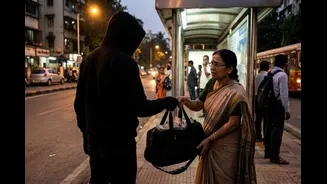
However, unlike typical cyber frauds where victims are asked to transfer money digitally, the scammers sent their men near the woman’s residence in Mumbai’s western suburbs to collect Rs 35 lakh and Rs 25 lakh in cash on seperate occasions.
According to police, the woman, whose husband passed away in April last year after taking loans worth Rs 1 crore for his business, was already under financial strain, paying monthly EMIs of Rs 1.1 lakh. About a month after his death, she received a video call from a man claiming to be a Delhi Police officer. He alleged that an account opened using her Aadhaar details was linked to a Rs 1.5 crore money laundering case and threatened her with arrest.
When she questioned why a Delhi-based case involved her while she lived in Mumbai, the caller transferred the call to another impersonator posing as a Mumbai DCP. The fake officer reportedly told her she was under a “digital inquiry” and advised her to clear all debts to “prove her innocence”.
As per the FIR cited by TOI, the impersonator even accessed land records, sending her a copy of her 7/12 extract and pressuring her to sell property outside Mumbai. When she struggled to find a buyer, the fraudsters escalated their demands.
The woman eventually sold her gold to arrange Rs 35 lakh. Recounting the incident, she reportedly said, “He also sent me the photo of the person who was going to collect the money, without his face, from the neck down, on my mobile phone and asked me to give the money to him.” She handed over the cash to a man near a bus stop close to her building.
Days later, on February 6, she arranged another Rs 25 lakh by selling more jewellery. The pattern repeated; a faceless photo was shared on WhatsApp, and an accomplice arrived outside her building early in the morning to collect the money.
Even after receiving Rs 60 lakh, the fraudsters continued to demand more, promising to “clear her loans”. It was only when they stopped responding to her calls that the woman realised she had been duped and approached the police.