







Leaders from Europe and beyond, including Ukrainian President Volodymyr Zelenskiy, gathered in The Hague on Tuesday to launch an International Claims Commission aimed at compensating Ukraine for hundreds
of billions of dollars in damage caused by Russia’s invasion and alleged war crimes.
The one-day conference, co-hosted by the Netherlands and the 46-nation Council of Europe, brought together dozens of senior officials, including EU foreign policy chief Kaja Kallas. The initiative comes as diplomatic efforts, led by the United States, intensify to find a way to end the war that began with Russia’s full-scale invasion of Ukraine in February 2022.
Dutch Foreign Minister David van Weel said the establishment of the commission marked a critical step towards accountability. “Without accountability, a conflict cannot be fully resolved. And part of that accountability is also paying damages that have been done,” he told reporters, adding that a treaty to set up the claims commission was being signed.
While the commission will be based in the Netherlands, details on how compensation awards would ultimately be paid are yet to be finalised. Early discussions have included the possible use of Russian assets frozen by the European Union, alongside contributions from member states. Van Weel stressed, however, that the aim was for Russia itself to bear the cost. “The goal is to have validated claims that will ultimately be paid by Russia,” he said, noting that the commission itself offers no financial guarantees.
The commission will incorporate the existing Register of Damage, set up in 2023, which has already received more than 80,000 claims from individuals, organisations and public bodies in Ukraine. These claims span a wide range of categories linked to losses suffered during the war.
President Zelenskiy said the move was essential to achieving a just peace. “It’s not enough to force Russia into a deal. It’s not enough to make it stop killing. We must make Russia accept that there are rules in the world,” he said.
Russian officials were not immediately available for comment. Moscow has repeatedly denied accusations of war crimes in Ukraine and has described EU proposals to use frozen Russian assets to support Ukraine as illegal, warning of retaliation.
The compensation process could face complications if any future peace deal includes amnesty provisions for wartime atrocities — an idea previously floated by the administration of US President Donald Trump. Plans to compensate victims of abuses, including sexual violence, child deportations and the destruction of religious sites, would be affected by such provisions.
More than 50 states and the EU have drafted a Council of Europe convention to formally establish the commission. It will come into force once ratified by at least 25 signatories and provided sufficient funding is secured. Over 35 countries have already indicated support and were expected to sign the convention at the meeting.
The claims commission represents the second stage of an international compensation mechanism for Ukraine. It will review and assess claims submitted to the Register of Damage and decide on compensation awards on a case-by-case basis. Claims can be filed by individuals, companies or the Ukrainian state for damage, loss or injury caused by Russian actions in or against Ukraine since February 24, 2022.
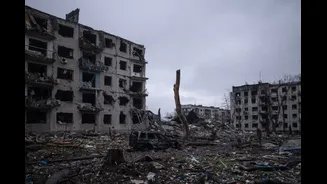
According to the World Bank, Ukraine’s post-war reconstruction could cost an estimated $524 billion over the next decade, nearly three times the country’s projected economic output in 2024. That estimate, however, only accounts for damage up to December 2024 and excludes destruction caused by intensified Russian drone and missile strikes this year targeting civilian infrastructure.
Founded in 1949, the Council of Europe is the continent’s oldest intergovernmental organisation, established to promote democracy, human rights and the rule of law across Europe.