







The United States and Iran have agreed to stop attacking each other and will meet in Qatar on Tuesday in an effort to resolve their dispute over the Strait of Hormuz, Axios reported, citing a senior US
official.
The development marks what could be the first major diplomatic breakthrough after days of escalating military confrontation.
According to the report, the two sides have agreed to suspend military action as negotiations move forward in Doha.
“We decided to stop all the kinetic activity,” the senior US official was quoted as saying.
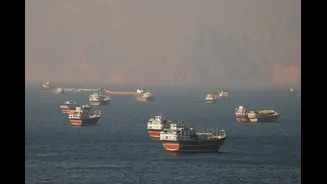
The meeting in Qatar’s capital is expected to focus on resolving tensions surrounding the Strait of Hormuz, one of the world’s most strategically important maritime routes, where recent attacks have disrupted shipping and heightened fears of a broader regional conflict.
Separately, Reuters reported that technical discussions between the two sides will continue under the framework of a 14-point memorandum of understanding (MoU) reached on June 17.
Quoting a senior official, Reuters reported, “Technical talks are slated to continue on all areas of the MOU. Both sides will stand down for now, and vessels can move freely,” referring to the agreement under which the Strait of Hormuz would be reopened to maritime traffic.
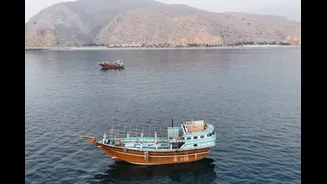
Fighting resumed after an Iranian projectile struck a cargo vessel in the Strait of Hormuz on Thursday, with both countries accusing each other of breaching the ceasefire.
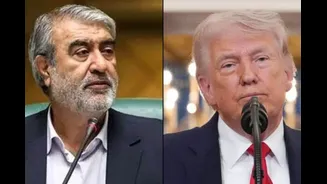
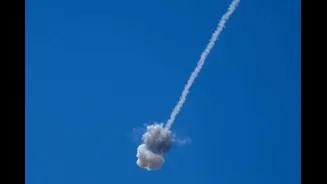
Iran launched missiles and drones targeting US military sites in Kuwait and Bahrain early Sunday, shortly after US President Donald Trump warned that the Islamic Republic would “cease to exist” if it failed to honour the agreement to end the conflict.
The US military had also carried out fresh strikes on Iran hours after a tanker was hit in the Strait of Hormuz, a key global energy shipping route that Tehran has largely closed during the conflict.
Trump, before the Axios report was published, warned on social media that the United States could intensify military action.
“There may come a point when we are no longer able to be reasonable, and will be forced to militarily complete the job that we very successfully started,” Trump wrote.
“If that happens, the Islamic Republic of Iran will no longer exist!” he added.
DIPLOMATIC EFFORTS FACED SETBACKS
The June 17 interim peace accord was intended to halt hostilities, reopen the Strait of Hormuz to shipping and allow negotiations on broader issues, including Iran’s nuclear programme.
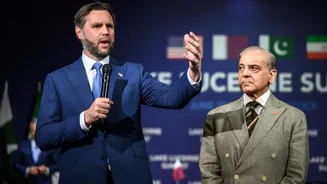
One round of mediated talks had already taken place in Switzerland, led by US Vice President JD Vance and Iran’s parliamentary speaker Mohammad Baqer Qalibaf.
Washington had also waived sanctions on Tehran, but despite those diplomatic efforts, military exchanges resumed and intensified.
Iran’s Islamic Revolutionary Guard Corps (IRGC) said its navy and air force had launched missile and drone attacks targeting US military facilities in Kuwait and Bahrain, alleging that American strikes had violated the ceasefire.
The IRGC warned that the US attacks would result in “the complete halt of all diplomatic processes,” while its naval command said American bases in the region “will experience hell in the coming days.”
A US official confirmed to Reuters that Iran had targeted American facilities but said there were no reported US casualties or major damage, although the situation remained fluid.
REGIONAL TENSIONS REMAIN HIGH
Israel carried out another strike on Iran-backed Hezbollah infrastructure in southern Lebanon on Sunday, following a separate strike on Saturday despite its latest ceasefire arrangement with Lebanon.
Iran has maintained that fighting in Lebanon must end if the broader regional agreement is to hold.
Elsewhere, Bahrain said an Iranian attack damaged a residential building in Muharraq province without causing casualties and urged the UN Security Council to convene an emergency session.
The Kuwaiti army, meanwhile, said it intercepted two ballistic missiles without any casualties or damage.
Qatar, meanwhile, confirmed the death of one of its nationals after the individual sustained shrapnel injuries aboard a vessel affected by military operations in the region, while another person was injured.