
Every trip leaves you with something—photographs on your phone, tired shoes, and maybe a fridge magnet you bought in a hurry at the airport. Over time, those souvenirs pile up, but the memories they were
meant to hold quietly fade.
What if your souvenirs weren’t bought at all? What if you put your mind, imagination, creativity, and emotions into crafting the souvenir—slowly, imperfectly, with your own hands? The meaning of those souvenirs would change, right? They would no longer be just objects, but memories shaped by your experience.
Before we figure out why this change happens and why these souvenirs don’t feel like just another item bought somewhere, here are a few ideas on how you can create your own souvenirs on your next trip, ones that tell the story of your journey and mean more than something picked off a shelf.
What You Bring Back When You Travel Slowly
You don’t need to be an artist or carry expensive supplies. Some of the most meaningful souvenirs come from what’s already around you.
If you come across fresh flowers fallen on the ground, pick them up. Not the rare ones, not anything growing—just what’s already there. Slip them between clean sheets of paper or the pages of a notebook and label them with a date and place.
As you move from one place to another, the flowers travel with you, slowly pressing flat, quietly holding on to that moment. By the time you return home, the flower has travelled with you, carrying the memory of that particular morning, that stretch of road, that unplanned stop.
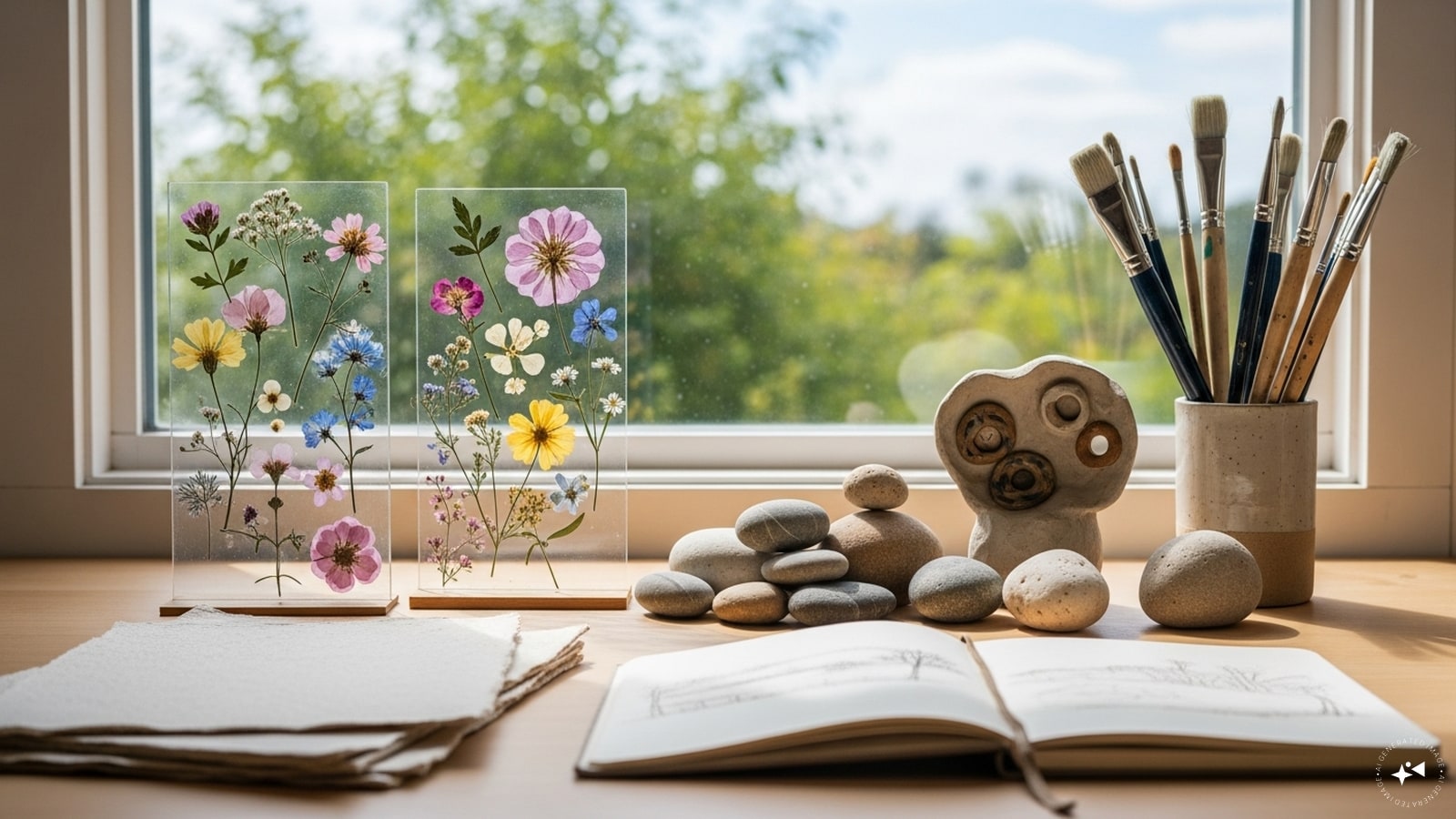
Collect a pebble from each stop on your journey, only from places that feel calm. Keep them with you as you move. When you’re back home, paint what you remember most: the colour of the sky, the curve of a road, the stillness of that afternoon. Place them in a glass jar and let them sit there, quietly telling the stories of the emotions that you felt on your journey.
If you plan to visit a beach, carry a small canvas along with a few colours and brushes. Sit there for a while, without rushing. Spread a little glue on the canvas and sprinkle some sand from the shore onto it. Let it dry. paint the ocean as you see it. The result won’t be a perfect seascape, but it will hold the mood of that day: the light, the breeze, the quiet you felt sitting there.
Carry a small block of instant-dry clay if you can. When you see a carving, a wall, or a pattern that makes you stop, press the clay against it gently. You’re not taking anything—just an impression. Once it dries, it becomes a small reminder of the details you chose to notice. You can always paint it and make it your own fridge magnet if you wish.
These ideas are only a beginning. You can always experiment, follow your curiosity, and return to something you loved doing as a child to create memories that feel truly yours.
None of this needs to look perfect. Uneven edges, faded colours, small cracks—these aren’t flaws. They’re proof that the souvenir was made slowly, while the journey was still unfolding.
What Creating Your Own Souvenirs Means
Creating your own souvenirs while travelling is less about craft and more about attention. It asks you to pause, observe, and respond to a place, rather than consuming it. And in doing so, it often leaves you with something far more lasting than anything wrapped in plastic.
The moment you decide to create something, travel changes pace. You begin to look closer. Which flower has already fallen? How does the shoreline curve here? What patterns does this old wall hold? Making souvenirs forces presence. You can’t rush it the way you rush sightseeing spots or photo stops.
In a world of packed itineraries and checklists, this small act becomes a quiet rebellion against speed, against overconsumption, against the idea that travel must always be productive or impressive.
Conscious Way To Remember Places: Creating your own souvenirs naturally makes you more conscious about what you collect. You learn to avoid plucking rare flowers or taking from protected sites. Instead, you work with fallen petals, loose sand, and impressions rather than extractions. The place remains intact, while your memory deepens.
In a time when over-tourism has made many destinations feel strained, this gentler approach to remembrance feels not just personal but responsible.
Souvenirs That Keep growing: Unlike store-bought keepsakes, handmade souvenirs don’t end when the journey does.
Back home, pebbles can be painted, pressed flowers framed, clay impressions turned into small objects you use daily. The act of finishing them becomes an extension of travel—proof that journeys don’t end at arrivals.
In revisiting these materials, you’re not chasing nostalgia. You’re honouring experience.
Less clutter, more meaning: Most travellers eventually reach a point where they stop buying souvenirs; not because they don’t care, but because they care too much about space, waste, and meaning.
Handmade souvenirs solve that problem quietly. They are few, intentional, and personal. They don’t demand display; they invite reflection. And when you look at them, you remember not just where you went—but who you were when you were there.
Making travel part of who you are: At its heart, creating your own souvenirs turns travel into a creative practice rather than a consumption habit. It shifts focus from proving where you’ve been to processing what it gave you.
You don’t return home with bags. You return with objects that carry silence, time, and attention. And years later, when the details blur, these handmade pieces do what souvenirs were always meant to do—they bring you back, gently, honestly, and whole.