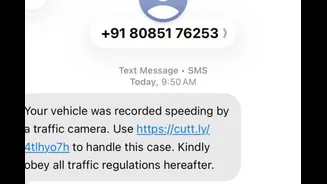









A Mumbai-based stand-up comedian narrowly escaped falling prey to a traffic challan scam that is now raising alarm among social media users, highlighting how convincing phishing attempts have become.
Comedian
Shridhar V shared that he received an SMS claiming his vehicle had been caught overspeeding by a traffic camera. The message, sent from a regular mobile number, urged him to pay an “urgent” fine and included a shortened link. At first glance, the alert appeared genuine.
Who says Indians are not innovative? Look at the sophistication of this scam 😱 I almost entered my card details before googling the domain. Insane amount of fraud must be happening with so many people. By the time police starts acting on it, they’d make millions! Terrible 😠 pic.twitter.com/KZyg6R4RnI
— Shridhar V (@iimcomic) January 17, 2026
It was only after taking a moment to examine the website address that Shridhar realised something was amiss. “Who says Indians are not innovative?” he wrote in a post, revealing that he had almost entered his card details before deciding to Google the link.
Screenshots shared by the comedian showed a webpage that closely mimicked the government’s official e-challan portal. The fake site prominently displayed the Ashoka emblem and described itself as “eChallan – Digital Traffic/Transport Enforcement Solution,” claiming to function under the Ministry of Road Transport and Highways.
The page carried a bold alert reading, “Urgent Payment Required! You have an outstanding traffic fine of INR 500. Pay immediately.” It listed a single pending challan with a long reference number, identified the department as “Traffic,” and featured a bright green “Pay Now” button. A warning below threatened heavy penalties, licence suspension, or even court summons if payment was delayed—language clearly intended to create panic.
A closer look, however, revealed the red flag. The website’s domain was echallan.pasvahan.icu, not the official echallan.parivahan.gov.in. The shortened link in the SMS had concealed the suspicious URL, making the scam harder to detect at first glance.