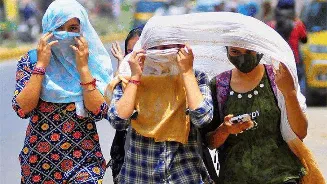








India is set to endure even harsher summer heat this week, with day time temperatures forecast to rise by a further 3-4°C. The searing heat waves sweeping several parts of the country could also get intense
as temperatures climb to 46°C.
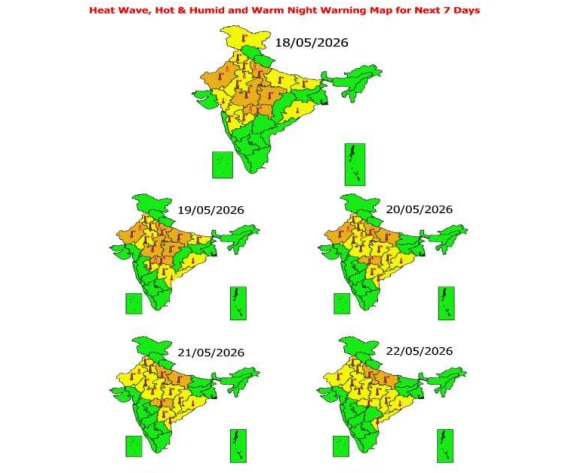
The India Meteorological Department (IMD) issued a special alert on Monday, with orange and yellow warnings for Jammu, Ladakh, Punjab, Haryana, Chandigarh, Delhi, Uttar Pradesh, Bihar, Rajasthan, Chhattisgarh, Gujarat, Maharashtra, Madhya Pradesh as well as Odisha, Telangana and coastal Andhra Pradesh from May 18 to May 24. The national capital where mercury is hovering over 40°C could also experience heatwaves in some areas from May 19 to May 22, with temperatures likely to touch 45°C.
The temperatures are already settling between 40-45°C in major parts of the country, and peaked to 46.4°C in Banda, Uttar Pradesh on Sunday, with the brutal heat disrupting daily life of people. The weather department said the maximum temperatures have surged 5-6℃ above normal in several places, triggering intense heatwaves, which could become severe in east Uttar Pradesh if the departure from normal crosses 6.5°C. Prolonged exposure to such extreme heat can cause heat-related illnesses, and worsen the existing ailments.
The nights are also warmer, with mercury settling around 29-30℃ in parts of Rajasthan and Vidarbha, worsening the impact of heat. “A gradual rise in maximum temperatures by 2-3°C is likely over many parts of Northwest India from May 18 to May 24, and by 3-4°C over Chhattisgarh till May 21,” warned IMD, urging people to stay hydrated, drink water even if not thirsty, avoid prolonged exposure to the sun, and cover their heads and wear lightweight clothes.
Experts cautioned that high temperature can increase likelihood of heat illnesses in people who are either exposed to the sun for a prolonged period or do heavy work, and there is especially high health concern for vulnerable people, mainly infants, the elderly, and people with chronic diseases.
Farmers have been advised to provide light and frequent irrigation to vegetable, moong fruit plants orchards and onion nurseries, and maintain adequate irrigation in standing sugarcane, cotton and summer fodder crops to avoid crop losses. They have also been advised to cover the roof of poultry sheds with grass to protect their livestock which can also face intense heat stress.
The heat is building up, even as concerns over El Nino also loom large. Meanwhile, the southwest monsoonwhich is likely to make its onset over Kerala on May 26, has already reached the Andaman and Nicobar Islands on May 16. However, this year, the IMD has warned that the four-month season could end with below-normal rains, as El Nino could likely impact it once it forms in July.