
The Supreme Court on Monday strongly rebuked Bollywood actor Rajpal Yadav over his failure to comply with an undertaking to deposit Rs 5 crore in a cheque bounce case involving private entity Murli Projects.
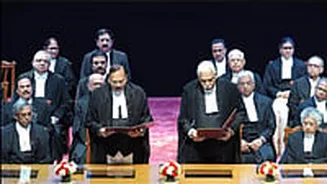
The Bench of Chief Justice of India Surya Kant and Justices Joymalya Bagchi and V Mohana directed that the payment be made by Tuesday. The case is titled Rajpal Naurang Yadav & Anr v. M/S Murli Projects Pvt Ltd.
The court noted that Yadav had undertaken to deposit Rs 5 crore with the court registry by Monday but had failed to do so. The actor produced a copy of a Rs 50 lakh demand draft and said it was being processed by the bank. “Is this genuine or not? We don’t know,” the bench said.
When Yadav’s counsel said the draft was with the bank, the complainant’s counsel alleged that the actor had no respect for the “majesty of the institution”.
Justice Bagchi then said, “They may be richer than you, but they are poor to the extent you have swindled them. This arrogance needs to be put in its right place. You should know when to open your mouth. Your place is in jail.”
How the Rs 5 crore dispute began
The case concerns Rs 5 crore received by Yadav and his wife from Murli Projects in connection with a film being produced by the actor. The parties entered into four agreements after the film could not be completed within the agreed timelines. Under the third agreement, Yadav gave eight security cheques to Murli Projects.
The third agreement was later replaced by a fourth agreement, described as a consent agreement dated April 21, 2013. According to Yadav’s plea, the agreement provided for the return of the eight security cheques and issuance of four fresh cheques of Rs 10 crore each.
Yadav alleges that Murli Projects did not return the eight security cheques and instead presented seven of them, which were dishonoured. This led to criminal complaints against Yadav and his wife.
From conviction to jail
In May 2024, a sessions court convicted Yadav and sentenced him to six months in jail. The Delhi High Court later suspended his sentence after his counsel assured the court that the dispute would be settled. The matter was also referred to the Delhi High Court Mediation Centre. However, the High Court later observed that despite repeated assurances and several adjournments, Yadav had failed to make promised payments. It noted that he had not deposited amounts he had undertaken to pay, including Rs 2.5 crore that he had sought permission to pay in instalments.
In February 2026, the High Court directed Yadav to surrender before jail authorities. His plea seeking more time was rejected. He surrendered on February 5 and remained in jail until the High Court granted an interim suspension of sentence after he deposited Rs 1.5 crore with the complainant. He was later sentenced to three months’ imprisonment for failing to deposit the remaining amount despite several undertakings. Yadav has challenged this before the Supreme Court.
SC gives one more deadline
According to Yadav’s plea, the subsequent consent agreement made the earlier cheques invalid and therefore the complaints based on those cheques were not maintainable under Section 138 of the Negotiable Instruments Act. The Supreme Court had on September 8 exempted him from surrendering, subject to depositing the money by September 9. On September 15, it granted another two-week extension and asked him to deposit the money by October 5.
When the matter was heard on Monday, the court was told that the amount had still not been deposited.
Yadav’s counsel cited the closure of banks for three or four days. “Why? You were given 16 days on September 15. Today we are on October 5. You are out of time by seven days. You could have filed an application seeking extension of time,” the court said.
The complainant’s lawyer said the total amount was Rs 7.5 crore and argued that Yadav should be liable for contempt. The court, however, did not dismiss his appeal as the complainant might then be unable to recover the money.
“We want to dismiss it, but we also want to balance equities to ensure that your client gets some money,” the bench remarked.
The court directed that the payment be made by Tuesday and listed the matter for compliance.