





From Tehran’s nuclear ambitions and ballistic missile programme to its network of proxy groups stretching across Lebanon, Syria, Iraq and Yemen, Iran has long occupied the centre of Israeli strategic thinking.
But that equation is beginning to change.
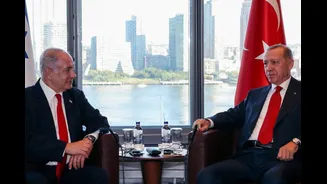
In recent weeks, Israeli Prime Minister Benjamin Netanyahu has warned about another regional power whose growing influence could reshape the Middle East — Turkey under President Recep Tayyip Erdoğan. The concern goes beyond diplomatic disagreements. It reflects a broader shift in Israel’s long-term security calculations as the regional balance of power changes following the recent conflict with Iran.
That does not mean Iran has disappeared from Israel’s threat matrix. Rather, Israeli policymakers increasingly appear to be asking a different question: if Iran’s conventional military capabilities have been weakened, who could emerge as the next major strategic competitor?
“Turkey is capitalising on the Middle East’s shifting dynamics,” said Alvite Ningthoujam, Deputy Director & Assistant Professor at Symbiosis School of International Studies in Pune. “With Iran’s dominance weakened by recent US-Israeli strikes that killed senior leaders and damaged its military infrastructure, Ankara sees an opening to reassert itself regionally. President Erdoğan’s ambition to lead the Muslim world is well known, and Assad’s fall in Syria has boosted Turkey’s leverage near Israel. Domestically, it is expanding its defence industry—drones, naval vessels and aircraft—while deepening its foothold in Gaza,” he added.
Regionally, Ankara intends to “encircle Israel, strengthen ties with Qatar and draw in Saudi Arabia, forging a loose Sunni axis that could act as a counterweight to Israel”. “Uncertainty over President Trump’s policy, especially talk of selling F-35s to Turkey, compounds Israeli concerns, as such a deal could erode its pre-emptive strike capacity. Combined with Turkey’s growing footprint in Libya, the Horn of Africa and Central Asia, these ambitions explain the heightened concern surrounding Ankara,” Prof Ningthoujam explained.
Why Is Netanyahu Suddenly Talking About Turkey?
Relations between Israel and Turkey have deteriorated steadily over the past two years, particularly after the war in Gaza. Erdoğan has become one of Israel’s fiercest critics, accusing the Netanyahu government of committing atrocities and positioning Turkey as a leading defender of the Palestinian cause.
Erdogan recently warned that Israel’s military operations in Syria and Lebanon had reached a point where they also posed a threat to Turkey.
“We will never allow Israel to realize its Promised Land plan,” Erdogan said, adding that Israel’s military operations threatened the entire world and had to be stopped.
Netanyahu responded on X, accusing Erdogan of committing genocide against Kurds, supporting Hamas, suppressing his own people and imprisoning political opponents. He said Erdogan was “the last person who can lecture the state of Israel on morality”.
Turkey hit back strongly at Netanyahu’s remarks. Presidential Communications Director Burhanettin Duran said a government accused of committing genocide in Gaza had no standing to lecture Turkey. The Turkish Foreign Ministry also accused the Israeli prime minister of trying to manipulate international opinion through what it described as baseless and provocative claims.
“Netanyahu, an expert in genocide, cannot hide his responsibility for serious crimes by using lies”, the ministry said in a statement.
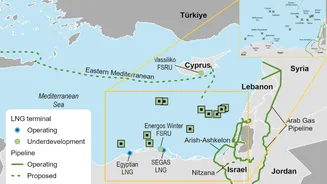
But Israeli concerns extend far beyond political rhetoric. Ankara has steadily expanded its military, diplomatic and economic footprint across the region. Turkish influence now stretches from northern Syria and Libya to the South Caucasus and the Eastern Mediterranean. Its rapidly growing defence industry, led by indigenous drones, missiles and armoured systems, has transformed Turkey into one of the region’s most capable military powers.
Israeli officials also worry that Washington could strengthen Ankara’s military capabilities further through advanced defence cooperation, including renewed discussions over F-35 fighter aircraft and other strategic systems.
For Netanyahu, the issue is no longer simply whether Turkey is criticising Israel. It is whether Ankara is becoming powerful enough to reshape the regional order in ways that could eventually challenge Israeli security interests.
Has Iran’s War Changed Israel’s Threat Perception?
Iran remains Israel’s principal military and ideological adversary. Its nuclear programme continues to dominate Israeli security planning, while Tehran retains influence through allied groups across the Middle East despite suffering military and economic setbacks. Yet strategic planning rarely focuses only on immediate threats.
The recent confrontation with Iran demonstrated both Tehran’s vulnerabilities and the limits of its conventional military capabilities. Even if Iran rebuilds over time, Israeli planners increasingly recognise that the regional landscape is changing.
Turkey, unlike Iran, is not internationally isolated. It possesses a much larger economy, a modern conventional military and expanding diplomatic influence across multiple theatres.
At some point in time, both Iran and Turkey have been regional powers in their own right, said Prof Ningthoujam. “Yet Turkey has consistently sustained partnerships with a wide range of actors — the US, Saudi Arabia, the UAE (barring a brief rift), Syria, Iraq, Russia, China and even Israel (in the recent past before the ties soured continuously since May 2010 Mavi Marmara flotilla incident) — allowing it to operate within the international system without major antagonism.”
Iran, by contrast, has “struggled” since 1979 to maintain cordial ties, particularly with the West, owing to its anti-Western ideology — a posture that has cost it politically, diplomatically, economically and, since mid-2025, militarily, the Professor explained. “Long seen as favouring unconventional strategies and proxy networks to build ‘strategic depth’, Tehran has steadily eroded trust with the region’s mostly Sunni-majority states. Turkey, meanwhile, is a NATO member with a diversified economy, a solid industrial base and a growing defence industry with export potential. Its reliance on proxies and asymmetric warfare casts Iran as a security challenge, whereas Turkey—capable of durable state-to-state partnerships—is viewed as a pragmatic player rather than a revisionist state.”
Could Syria Become The Next Flashpoint?
If Israel and Turkey are moving towards greater strategic competition, Syria is where that rivalry is most likely to play out.
Turkey maintains military forces and significant influence across large parts of northern Syria, where it supports allied groups and seeks to prevent Kurdish militias from expanding along its border.
Israel, meanwhile, has repeatedly carried out military operations inside Syria to prevent hostile forces from establishing positions close to its territory.
“Given Israel’s misgivings about Turkey’s regional ambitions in recent years, Syria could well become the stage for a new rivalry—though not an imminent risk of direct military confrontation,” points out Prof Ningthoujam. “For now, it is more a contest for influence. Syria’s significance lies in its strategic location, where Israeli security concerns, Turkish ambitions, the Kurdish question and the future regional order intersect.”
For years, Ankara’s “core objective” has been to prevent an autonomous Kurdish region along its border, making influence in northern Syria imperative. For Israel, the twin aims have been curbing Iran and Hezbollah; with Assad gone and Tehran weakened, it has little appetite for a strengthening Turkish foothold on its doorstep. Unlike the Iranian case, “Turkey and Israel are not ideological rivals” in the strictest sense, but “competitors for power, with limited interest in direct confrontation”. The likely outcome is a sustained strategic rivalry, each side manoeuvring for influence, Prof Ningthoujam explained.
Is Netanyahu Also Playing Domestic Politics?
Domestic politics cannot be separated from Netanyahu’s messaging. The Israeli PM continues to face political pressure over the Gaza war, judicial reforms and coalition politics. Presenting Israel as confronting multiple external threats reinforces his long-standing image as the country’s foremost security leader.
Analysts argue that highlighting Turkey serves domestic political purposes as much as strategic ones, allowing Netanyahu to frame Israel’s security challenges within a broader regional narrative.
Netanyahu is in a precarious political position, facing charges of bribery, fraud and breach of trust, alongside mounting pressure from his right-wing coalition and persistent criticism over security failures—most notably since the Hamas attacks of October 7, 2023. “With elections slated for late October, he must tread carefully. In this context, his approach towards Turkey is shaped not only by strategic concerns but by domestic imperatives,” Prof Ningthoujam says.
Netanyahu has a clear incentive to frame Israel’s regional challenges through the lens of national resilience, deterrence and the defence of the country’s dominant standing. “Seen this way, Turkey’s expanding influence in Syria, for instance, can be cast as an emerging threat, reinforcing his image as a security-focused leader.”
Ultimately, while Turkey’s rise is a “genuine strategic challenge”, Netanyahu’s framing of it is also shaped by domestic politics, coalition pressures and the need to sustain support among key constituencies, the professor pointed out.
What Does This Mean For West Asia And The US?
The US finds itself balancing two critical regional partners. Israel remains Washington’s closest ally in the Middle East, while Turkey remains an important NATO member controlling access to the Black Sea and playing a central role in European security.
Trump has maintained working relationships with both Netanyahu and Erdoğan, making Washington’s position particularly delicate.
The debate over future US defence cooperation with Turkey, including advanced fighter aircraft and other military technologies, illustrates the challenge facing American policymakers.
“Given the rapidly evolving geopolitics of the Middle East, Turkey’s gradual rise as another principal rival to Israel could strain, rather than sever, the Western order. Its bid to acquire the US-made F-35, as a fellow NATO member, complicates Washington’s balancing act—forcing it to weigh the claims of a treaty ally against its commitment to safeguard Israel’s qualitative military edge. A regional realignment could also accelerate, with Turkey, Qatar and Saudi Arabia forming a Sunni bloc that dilutes the Abraham Accords’ momentum. Simultaneously, Israel may deepen ties with Cyprus, Greece, the UAE and Gulf states wary of Turkish ambitions.
“This would confront the US with a genuine dilemma: managing two indispensable partners with diverging aims, particularly in Syria. The likely near-term outcome is not open confrontation but a more fragmented, transactional Middle East—where fluid, issue-based alignments replace fixed camps, and Washington’s leverage rests on keeping both Turkey and Israel within its orbit,” Prof Ningthoujam explained.